
How to create impact while keeping balance, scale, and intention
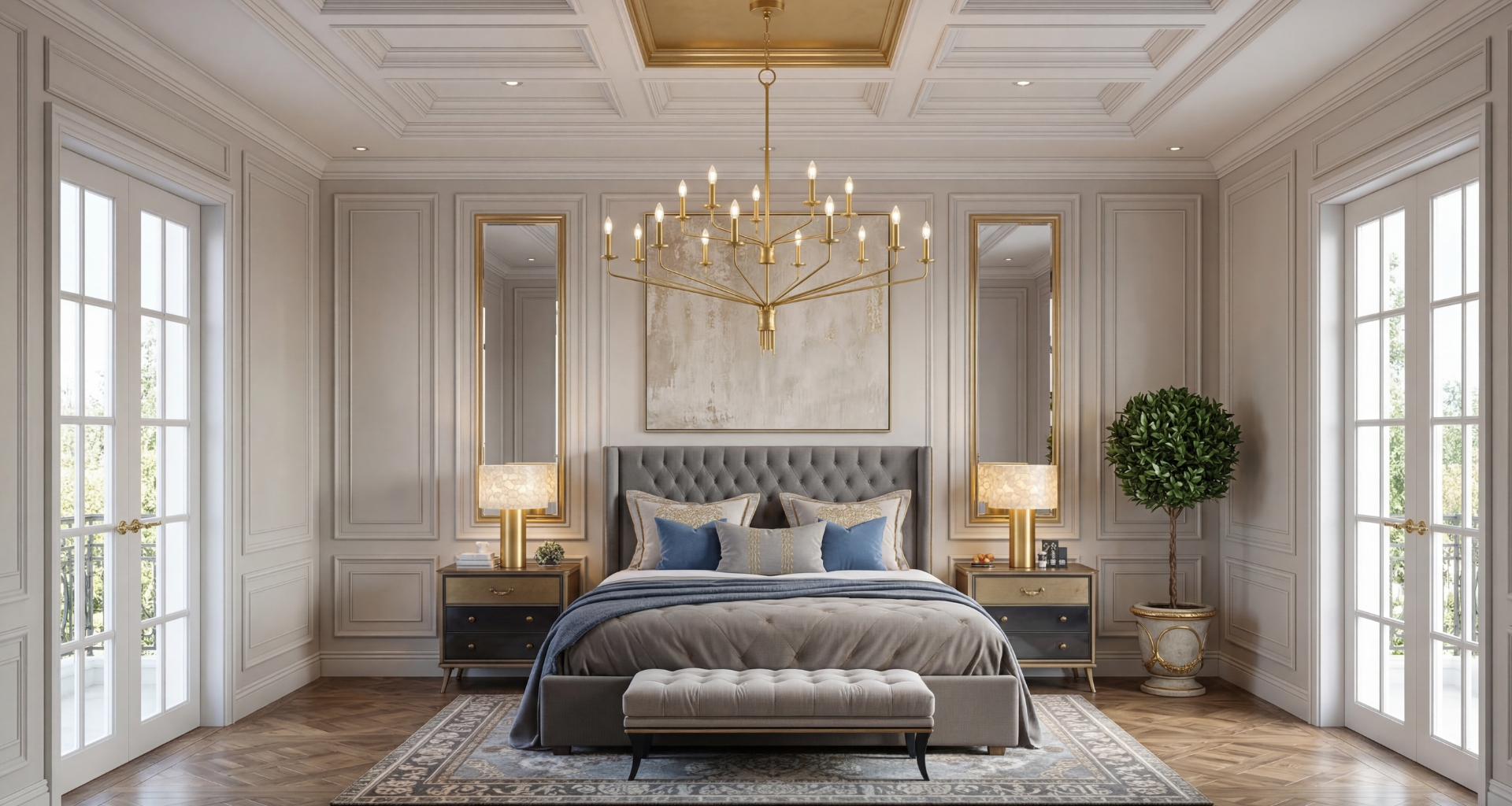
Lighting has always played a functional role in the home, but statement lighting takes that a step further. It becomes a defining moment. Something that shapes how a room feels the second you walk in, naturally drawing the eye and establishing a focal point.
The difference between standard lighting and statement lighting comes down to how it’s used. It’s no longer about oversized fixtures or purely decorative pieces that stand out for the sake of it. In today’s design-driven spaces, the right fixture does more than attract attention. It acts as a visual anchor, bringing structure to the room and subtly influencing everything around it.
When done well, statement lighting doesn’t compete with the space. It works with it. It draws attention, but still feels connected. That balance is what makes it effective. So how do you actually use lighting to make a statement without it feeling oversized, disconnected, or overwhelming?
BUILD AROUND IT, DONT RELY ON IT
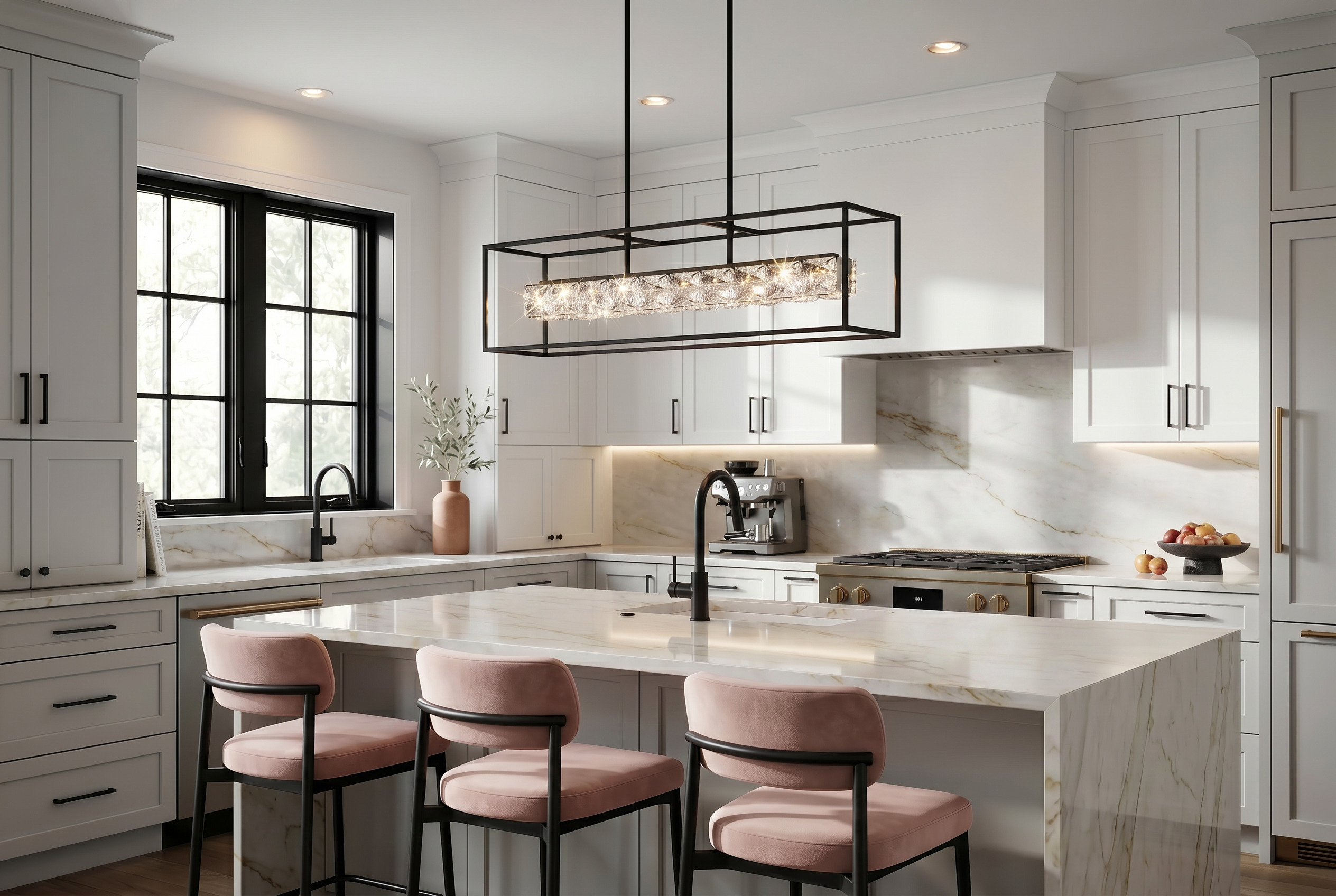
One of the most common mistakes is expecting a single fixture to carry the entire room. Even the most striking chandelier or pendant needs support. Without it, the space can feel flat or unbalanced.
This is where layered lighting comes in. A well-designed room uses a combination of:
- Ambient lighting for overall visibility
- Task lighting for function
- Accent lighting for depth and emphasis
Your statement piece should sit within that system, not replace it. When lighting is layered correctly, the room feels cohesive and comfortable. When it’s not, even a beautiful fixture can feel harsh or out of place.
CHOOSE THE FOCAL POINT INTENTIONALLY
Not every fixture needs to be a statement. The goal is to decide where you want attention to go, then design around that. Statement lighting works best when it reinforces something that already exists in the space. A dining table. A kitchen island. A foyer entry. When it aligns with a natural focal point, it feels grounded and purposeful.
Trying to force a focal point where one doesn’t naturally exist is where things start to feel disconnected. In most cases, one primary statement is enough. Larger spaces may include multiple light sources, but there should still be a clear hierarchy. One focal point, supported by everything else.
BALANCE VISUAL WEIGHT, NOT JUST SIZE
This is where a lot of decisions branch in the wrong direction. It’s easy to focus on size alone, but what really matters is how heavy a fixture feels visually.
A large fixture with open lines or glass elements can feel light and unobtrusive. A smaller fixture with dense materials or darker finishes can feel much heavier than expected. That’s why bigger isn’t always better. The goal is to create balance, not visual competition.
Once you understand how statement lighting functions within a space, the next step is selecting the right type of fixture. Each category creates impact in a different way.
CHANDELIERS
Chandeliers define a space. They create a strong visual center and help anchor the room. While traditionally used in dining rooms and entryways, they now appear more often in living spaces and bedrooms. The key is proportion. The fixture should feel connected to what sits beneath it, not floating above or overpowering the room.
PENDANTS
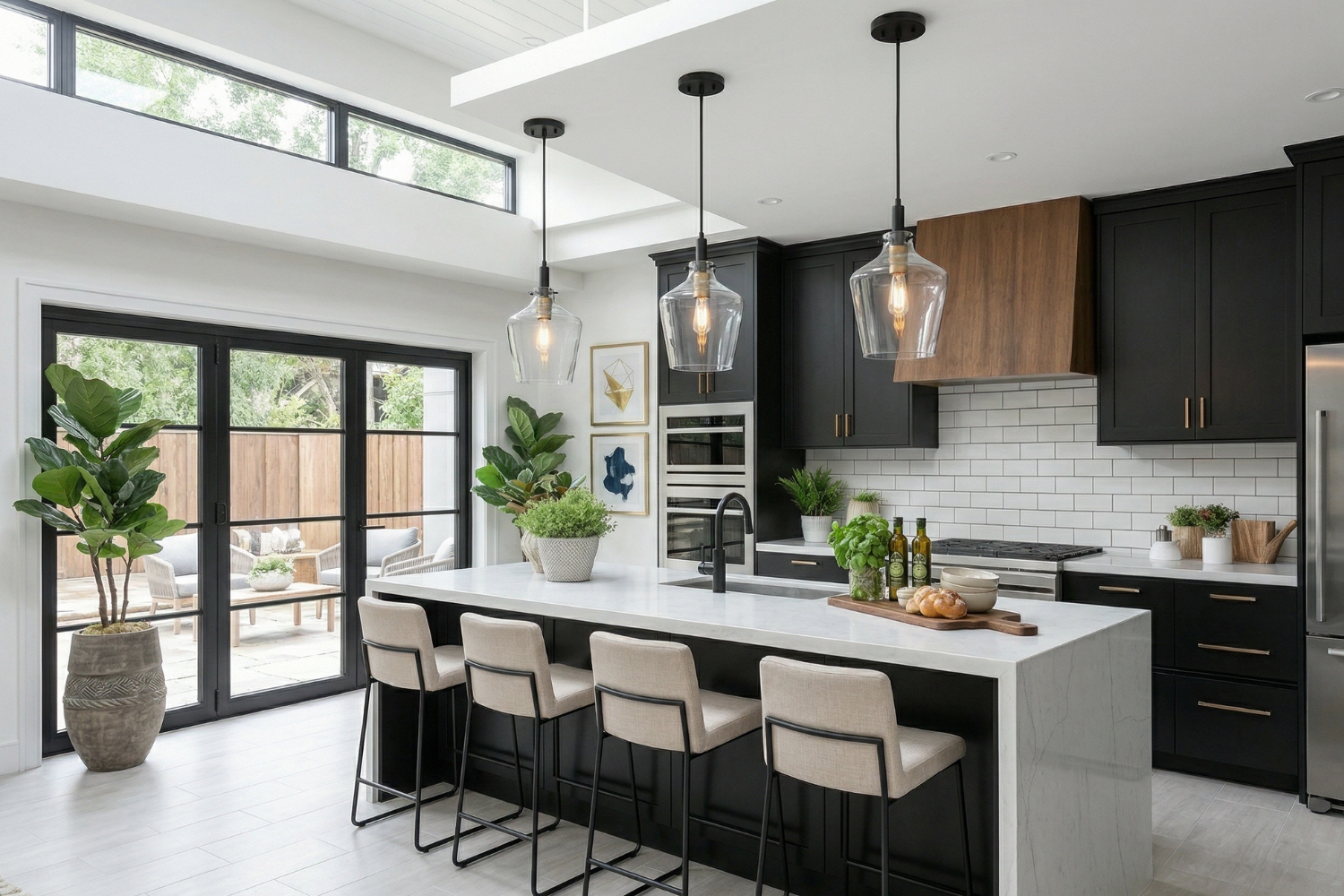
Pendants offer a more focused approach. They highlight specific areas rather than filling the entire space. Over kitchen islands or dining tables, they create rhythm and structure. A single oversized pendant can feel bold and modern, while a series of smaller pendants introduces repetition and balance. Spacing, alignment, and height all matter here.
Sconces play a quieter role, but they are essential for balance. They add warmth, soften the space, and support the overall lighting scheme without competing for attention. They work especially well when framing mirrors, artwork, or architectural features.
FLOOR AND TABLE LAMPS
Not every statement needs to come from above. Floor and table lamps create more intimate moments within a space. They’re ideal for reading corners, console tables, and layered living areas. These pieces often complete the room, bridging the gap between function and atmosphere.
WHERE STATEMENT LIGHTING WORKS BEST
If you’re unsure where to start, focus on spaces where lighting naturally becomes a focal point:
- Dining rooms: Center a chandelier over the table to anchor the entire space
- Kitchen islands: Use pendants to create structure and rhythm
- Entryways and foyers: Make a strong first impression with a single defining fixture
- Living rooms: Use a statement piece to ground the seating area
- Bedrooms: Swap traditional lamps for sculptural fixtures or bold sconces
These are areas where lighting isn’t just functional. It actively shapes how the space is experienced.
COMBINE TEXTURE, FORM, AND FINISH TO CREATE YOUR STATEMENT
Once placement is right, the impact comes from design. Texture, form, and finish are what take a fixture from purely functional to something that feels intentional and integrated into the space.
FORM SETS THE TONE
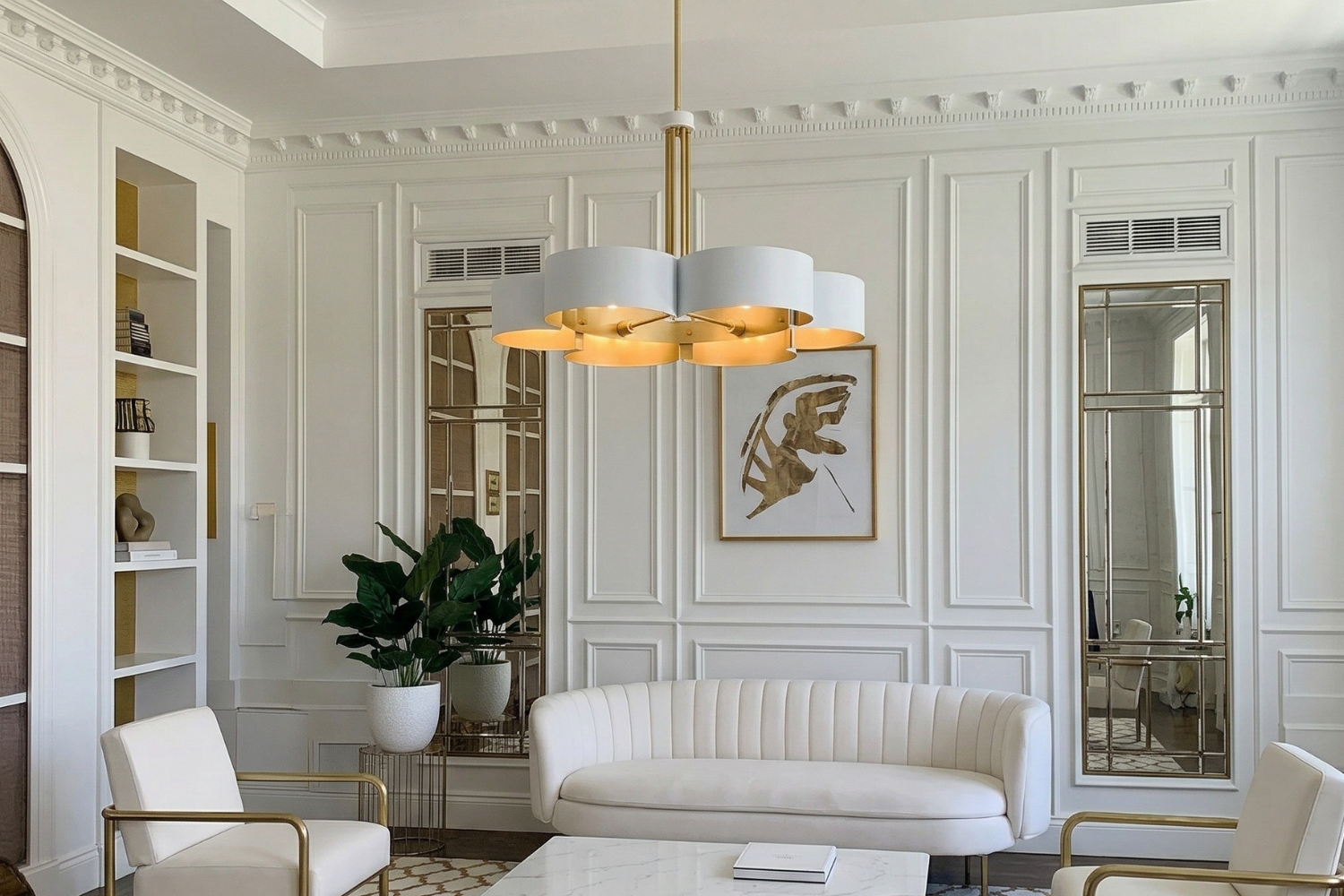
There’s a clear shift toward softer, more organic silhouettes. Curved lines, asymmetry, and sculptural shapes feel more natural and less rigid within a space. In minimal interiors, form can carry the room. In more layered spaces, simpler shapes help maintain balance.
TEXTURE CREATES DEPTH
Materials like seeded glass, alabaster, ceramic, and fabric diffuse light instead of projecting it harshly. The result is softer, warmer, and more inviting.
FINISH CREATES COHESION
Warmer tones like aged brass and champagne bronze feel natural and easy to layer. Darker finishes add contrast, but also increase visual weight. Mixed finishes work when they’re controlled, not competing.
KEEP IT INTENTIONAL
Form, texture, and finish should support each other, not compete. If the shape is bold, simplify the finish. If the form is minimal, let texture carry the interest.
Too many competing elements can make even a well-designed fixture feel busy. The goal is balance. A fixture that stands out, but still feels like it belongs.
A FEW PRACTICAL GUIDELINES TO GET IT RIGHT
- Make sure the fixture is centered over a clear focal point
- Leave enough clearance. Most fixtures should hang 30–36 inches above a dining table or island
- Scale to the furniture below it, not just the room
- Use supporting lighting so the statement piece doesn’t have to do everything
- Step back and look at the full space. If it feels heavy or distracting, it probably is
HOW TO KNOW YOU’VE CHOSEN THE RIGHT STATEMENT PIECE
At the end of the day, statement lighting shouldn’t feel forced. It shouldn’t be the loudest element in the room or something that competes for attention. It should feel intentional. Like it naturally belongs within the space.
The right fixture will anchor the room without overwhelming it. It will complement the materials, layout, and overall design instead of fighting against them. If you find yourself questioning whether it’s too much, it probably is. If it feels balanced, considered, and effortless, you’re on the right track.
Statement lighting isn’t about going bigger or more dramatic. It’s about making thoughtful choices that bring structure, warmth, and personality into your home. When everything aligns, lighting moves beyond function. It becomes one of the most defining elements in the space.
