
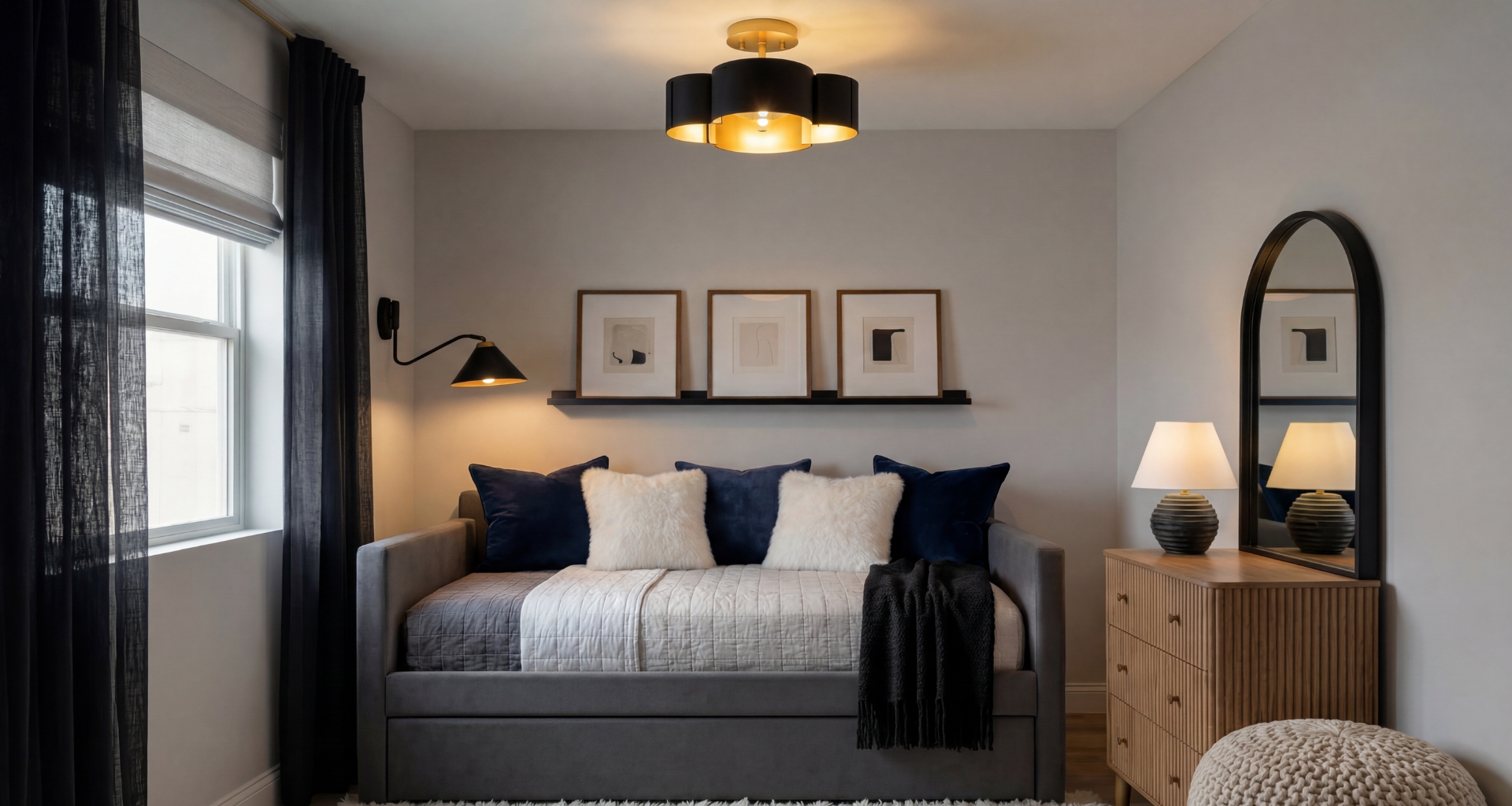
Small spaces tend to get blamed for problems they didn’t create. When a room feels tight, awkward, or harder to use than it should be, the issue is rarely the square footage. It’s usually the lighting.
Lighting is what defines how a space actually works. It controls what feels open versus closed in, what feels usable versus frustrating, and what looks intentional versus unfinished. In a smaller room, those differences are harder to ignore.
When lighting is handled well, the space doesn’t feel small in a limiting way. It feels efficient, balanced, and easier to live in. Nothing about the layout changes, but the experience of being in the room does. That’s why lighting ends up doing more heavy lifting in small spaces than anything else.

Why Lighting Matters in Small Spaces
Lighting has a direct influence on how large or confined a room feels. Poor lighting can make a space feel flat and closed in, while well-planned lighting introduces depth, softens hard edges, and helps the room feel more open and balanced.
In smaller spaces, every detail carries more visual weight. A bulky fixture, uneven light distribution, or mismatched bulbs becomes immediately noticeable. That’s why lighting decisions in a small room need to be intentional from the start.
How Lighting Affects the Perception of Space
Light directs where the eye goes and how it moves through a room, which is what makes it such a powerful design tool.
Illuminating vertical surfaces like walls or curtains can make ceilings feel taller. Lighting corners helps the room feel more expansive. Even, consistent light distribution creates a sense of balance and continuity across the space.
Dark corners and uneven lighting introduce hard visual boundaries. They define where the room ends, which can make everything feel tighter than it actually is. If the goal is to make a small room feel larger, the focus should be on minimizing those visual edges and guiding the eye smoothly throughout the space.
Common Lighting Challenges in Small Rooms
Most small spaces face the same constraints. Lower ceiling heights, limited natural light, and tighter furniture layouts all make lighting more complicated.
A common misstep is relying on a single overhead fixture to solve everything. It may seem efficient, but it often creates harsh shadows and leaves parts of the room underlit. Addressing these challenges starts with one core approach: layered lighting.
Start with Layered Lighting
If there’s one approach that consistently works in small spaces, it’s layered lighting. Relying on a single source rarely provides the control or coverage a room actually needs.

Why One Overhead Light Is Not Enough
A single ceiling fixture concentrates light in one central point. The middle of the room becomes bright, while edges and corners fall into shadow. That contrast can make the space feel smaller and more confined.
It also limits flexibility. You don’t have much control over how the room feels throughout the day or how it adapts to different activities.
How to Combine Ambient, Task, and Accent Lighting
Layered lighting works by distributing light more intentionally across the room, rather than relying on a single source.
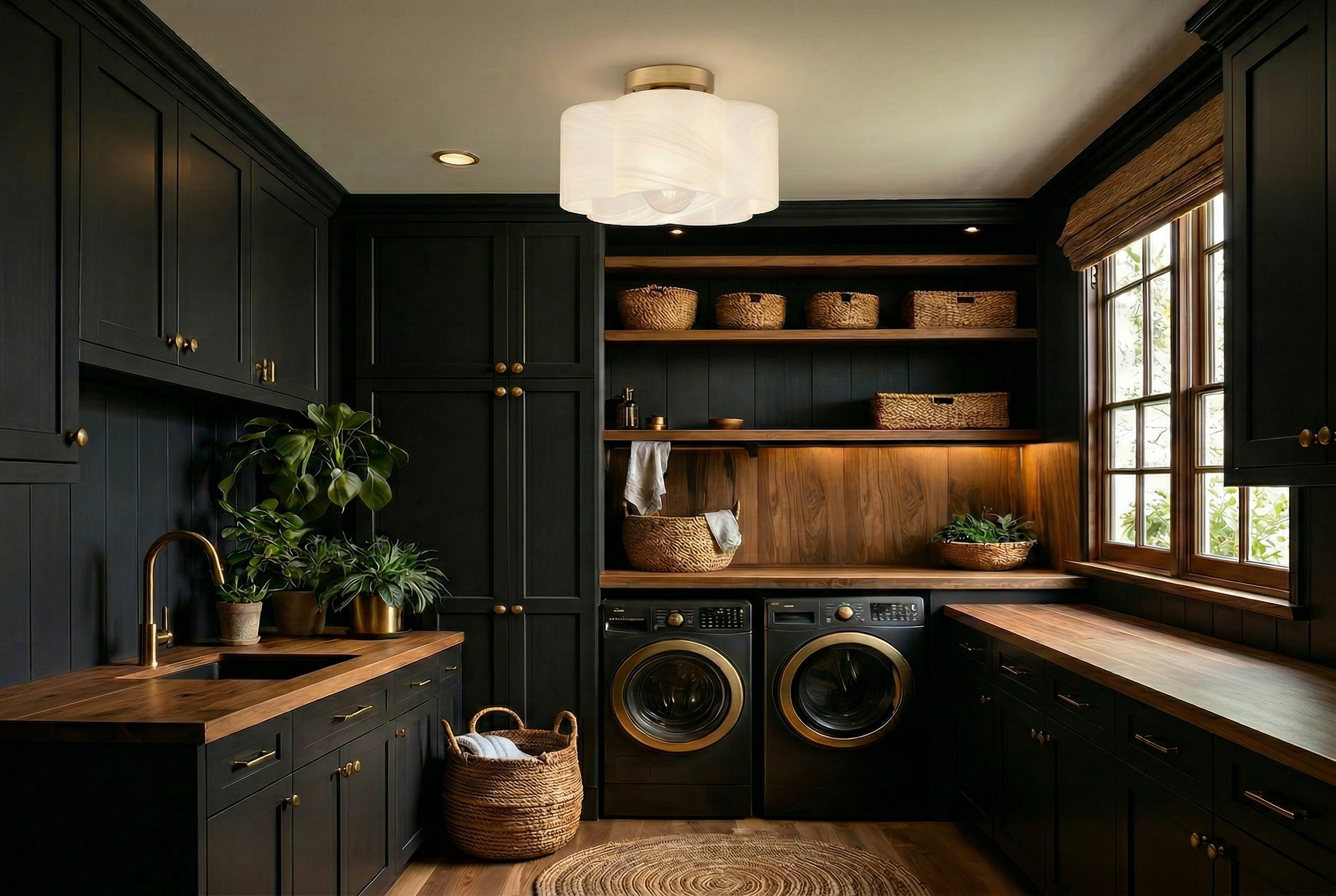
Ambient lighting sets the overall brightness. In smaller spaces, this is often handled by a flush mount or semi-flush mount ceiling fixture that provides even, general light.
Task lighting supports specific activities. This might be a reading light beside a chair, under-cabinet lighting in a kitchen, or a focused source at a desk. Accent lighting adds depth and dimension. It can highlight texture, draw attention to architectural details, or illuminate a mirror to reflect light back into the space.
In a small living room, this could mean a semi-flush mount for general lighting, a slim floor lamp near seating for reading, and a subtle accent light aimed at a wall or corner to soften the edges. Together, this creates dimension without adding visual clutter.
Choose Fixtures That Save Space
Fixture selection carries more weight in small spaces because there’s less room to disguise missteps in decor or furniture. The goal is to maximize light output without adding visual bulk.
Flush Mounts and Semi-Flush Mounts for Low Ceilings
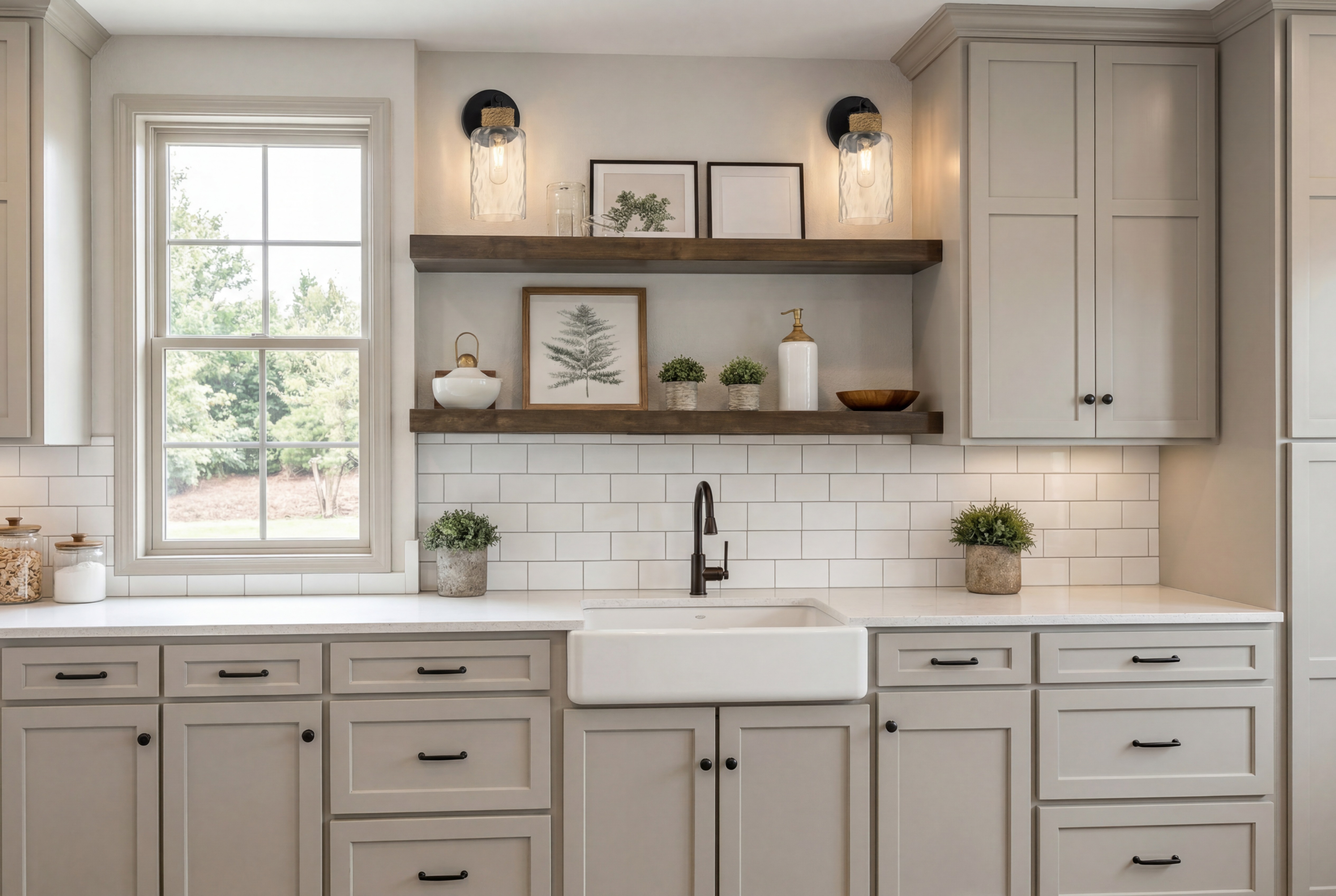
In smaller rooms, flush and semi-flush mounts are often the most practical starting point. They provide strong ambient lighting without extending too far into the space.
This keeps sightlines open and helps the ceiling feel higher. A well-placed semi-flush can still introduce style while maintaining a clean, unobtrusive profile.
Wall Sconces to Save Floor and Table Space
Wall sconces are one of the most effective solutions for small spaces. Mounted directly to the wall, they free up valuable surface space on nightstands, consoles, and side tables.
They work well beside beds, mirrors, or in entryways where space is limited. They also introduce vertical light, drawing the eye upward and helping the room feel taller.
Slim Table Lamps and Floor Lamps for Tight Layouts
When incorporating lamps, scale is critical. Slim profiles and more open designs tend to work best.
Bulky bases and oversized shades can interrupt sightlines and make the room feel crowded. A streamlined silhouette keeps the space feeling lighter and easier to move through.
Adjustable Fixtures for Flexibility
Adjustable fixtures are especially useful in small rooms that serve multiple purposes.
A directional sconce or adjustable floor lamp allows you to shift light where it’s needed, whether that’s toward a seating area, a workspace, or a wall to create added depth.
Use Lighting to Make the Room Feel Bigger
This is where lighting moves beyond function and begins to influence how the space is perceived.
Brighten Dark Corners to Open Up the Room
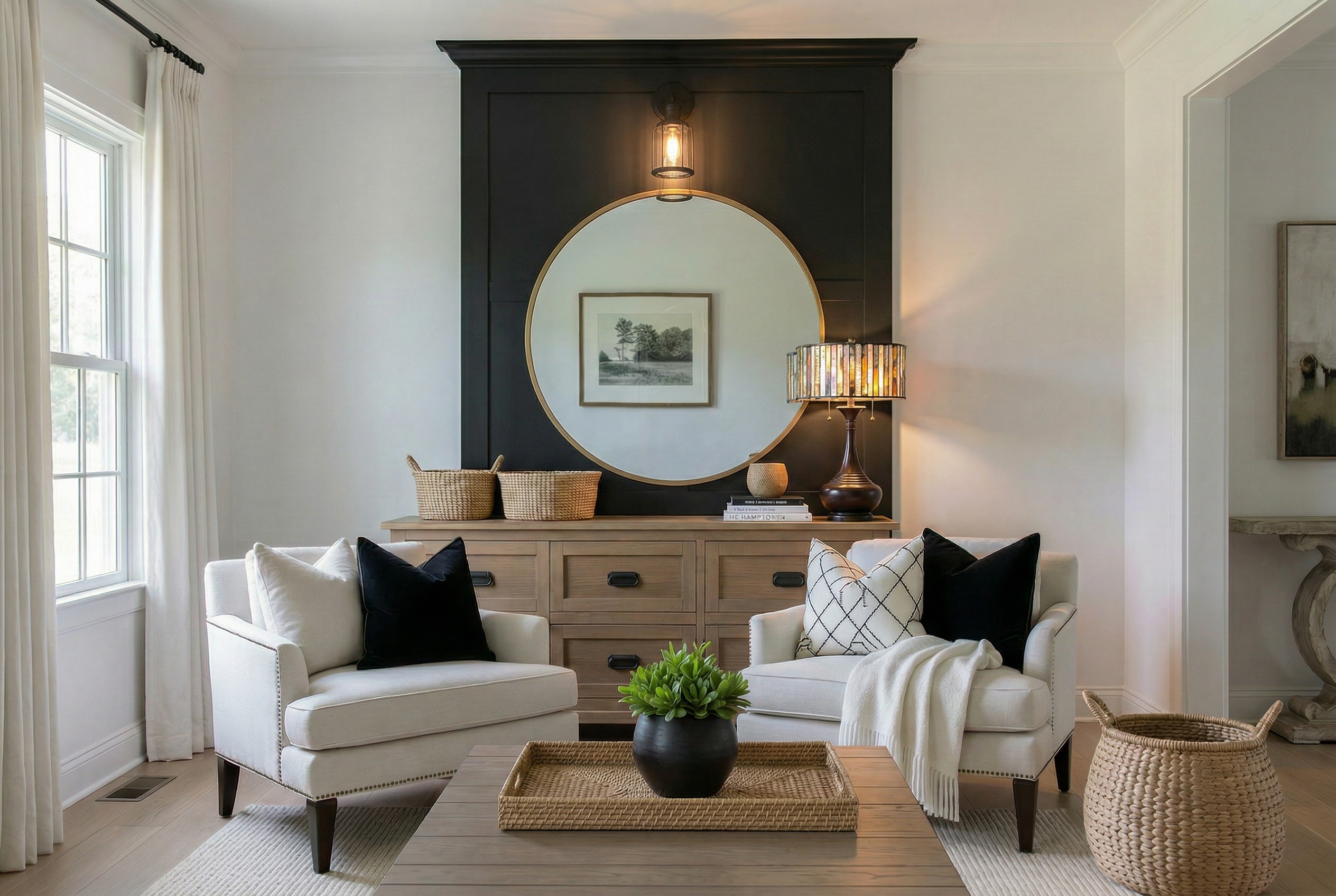
Corners define the boundaries of a room. When they’re left unlit, the space can feel more enclosed. Even a small amount of light in these areas softens those edges and helps the room feel more open.
Use Reflective Surfaces to Bounce Light
You don’t always need additional fixtures to increase brightness. In many cases, making better use of existing light is just as effective.
Mirrors, glass, and metallic finishes help reflect light throughout the space. Placing a mirror across from a light source can noticeably enhance brightness and create the impression of a larger room.
Keep Window Areas Light and Unobstructed
Natural light does a significant amount of the work for you. The more you allow in, the easier it is to maintain an open, airy feel. Avoid heavy or dark window treatments that block light. Lighter fabrics or minimal coverings help preserve that sense of openness during the day.
Pick the Right Bulbs and Color Temperature
The bulb you choose has just as much impact as the fixture itself.
Warm vs. Cool Light: What Works Best?
Warm light creates a softer, more relaxed atmosphere, while cooler light feels brighter and more energizing. In most small spaces, a neutral to slightly warm color temperature works best. It keeps the room comfortable without making it feel dim or overly harsh.
Choosing the Right Bulbs for Desired Ambiance
Consistency matters more than people expect. Mixing color temperatures in a small room can make the space feel disjointed. Staying within a consistent range helps everything feel cohesive and easier on the eye.
Small Space Lighting by Room Type
Different rooms call for slightly different approaches, even when square footage is limited.
Living Rooms
Use a combination of a ceiling fixture, a slim floor lamp, and one or two accent sources. This provides enough light for everyday use while keeping the space flexible and comfortable.
Bedrooms
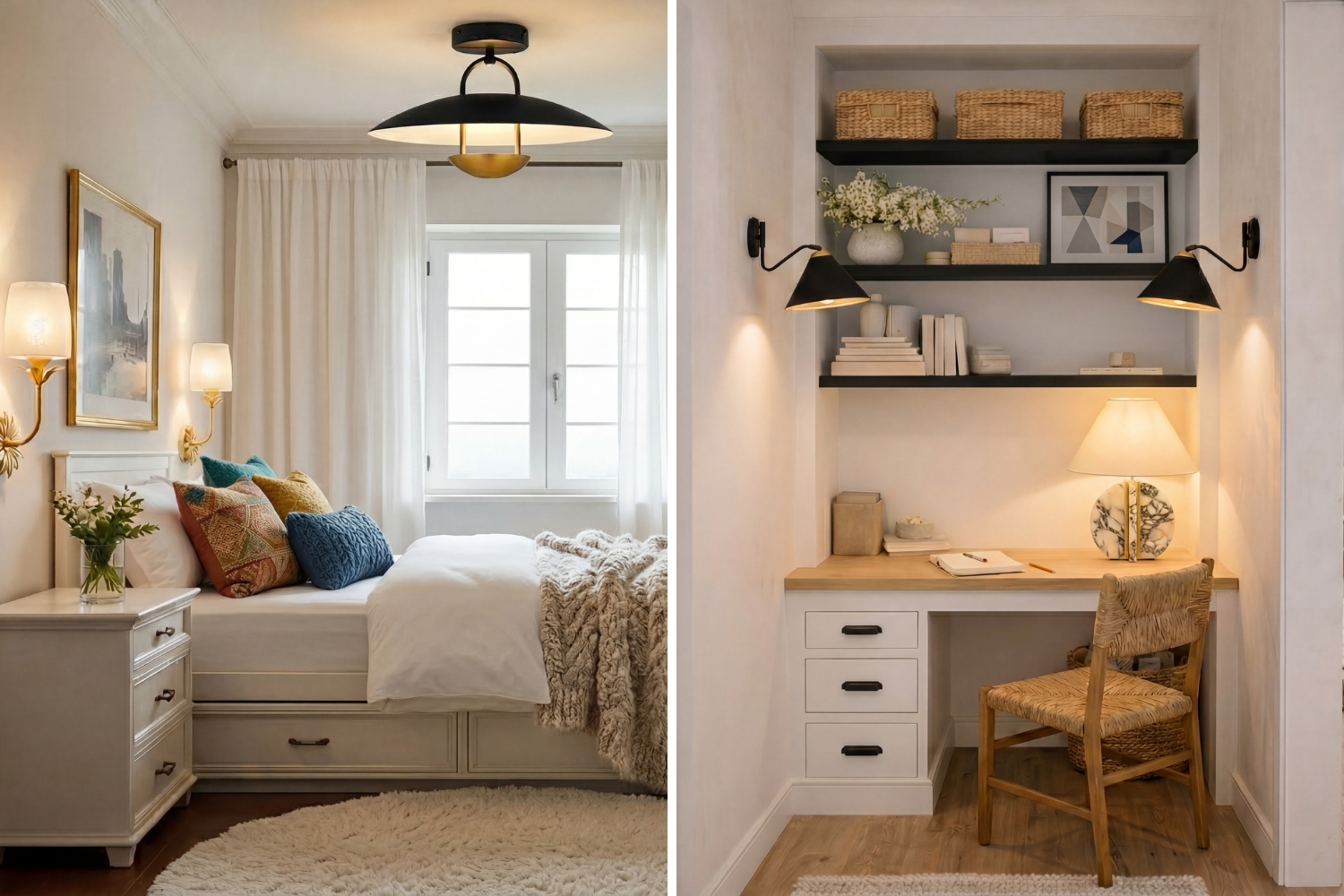
Wall sconces or small hanging lights beside the bed are a strong option. They free up nightstand space and create a cleaner, more streamlined look. Soft, warm lighting helps the room feel more relaxed and settled at night.
Kitchens and Dining Nooks
Under-cabinet lighting is one of the most effective upgrades in a small kitchen. It improves visibility and adds depth to the space. Pair it with a compact ceiling fixture to maintain overall brightness without overcrowding the room.
Entryways and Hallways
These areas are often narrow, so lighting needs to be simple but intentional. A flush mount paired with a sconce or two can make the space feel wider and more inviting.
Common Small Space Lighting Mistakes to Avoid
A few issues come up repeatedly in smaller rooms:
- Relying on a single light source
- Choosing fixtures that are too large or visually heavy
- Ignoring corners and vertical surfaces
- Mixing too many bulb color temperatures
- Blocking natural light
Avoiding these alone can noticeably improve most small space lighting setups.
Practical Tips for Installation and Placement
Even well-chosen fixtures can fall short if placement isn’t handled properly.
Aim to distribute light across the room rather than concentrating it in one area. Pay attention to how light interacts with walls, ceilings, and surrounding furniture, since that’s what shapes how the space is perceived.
In tighter layouts, low-profile LED sconces add light without taking up space or needing major installation.
How to Get the Most Out of Your Lighting
This is where many small spaces start to feel slightly off. The fixtures themselves may be well chosen, but the way they’re placed and layered doesn’t fully support the room.
Wall sconces should be installed at or slightly above eye level. If they’re too high, they lose visual impact. If they’re too low, they feel misplaced and disrupt the balance of the wall.
Scale plays a bigger role than most people expect. In tighter rooms, slightly more compact fixtures tend to feel more intentional and well-proportioned. Oversized pieces can dominate the space and throw off the overall composition.

Dimmers are one of the most practical upgrades you can incorporate. They let you adjust brightness and mood without changing fixtures, which is especially useful in a smaller space.
It’s also helpful to think of your space in terms of zones, even within a compact layout. A seating area, workspace, and pathway each serve different functions, and the lighting should reflect that. Defining these areas with light adds depth and structure.
Key Takeaway
Lighting is one of the most effective tools for transforming a small space. With the right mix of layered lighting, space-saving fixtures, and thoughtful placement, even a small room can feel brighter and more open.
Shop Wall
Sconces, Flush and Semi-Flush Mount Lights and lamps to
start transforming your space today!
