
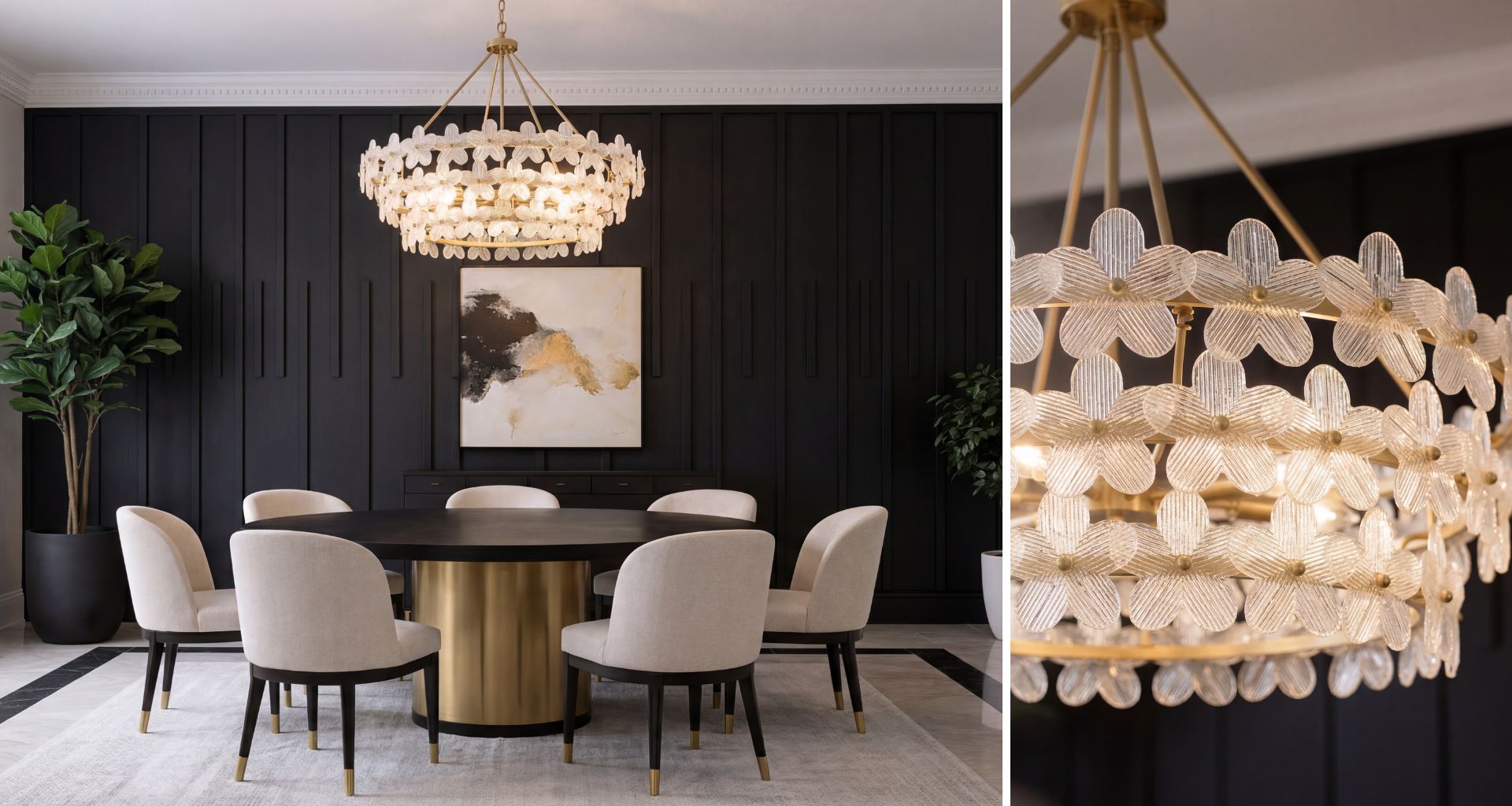
Choosing the right light fixture size is one of the most important steps in designing a space that feels balanced and functional. A fixture that is too small can feel insignificant and underwhelming. One that is too large can overpower the room and throw off the entire layout.
If you have ever looked at a chandelier or pendant and thought, “Will this actually fit my space?”, you are not alone. Sizing lighting correctly is a common challenge, but it becomes much easier once you understand a few core guidelines. This guide breaks down how to size a light fixture for different areas of your home, including dining rooms, kitchens, living spaces, and entryways, so you can choose confidently and avoid costly mistakes.
Why Light Fixture Size Matters
Lighting does more than provide visibility. It plays a direct role in how a room looks, feels, and functions every day. When the scale is right, the fixture feels intentional. It anchors the space, complements the furniture, and enhances the overall design. When the scale is off, even a beautiful fixture can feel awkward or out of place.

- Maintain visual balance within the room
- Ensure adequate light distribution
- Highlight key areas like dining tables or kitchen islands
- Support both function and design
The goal is not just to find a fixture you like. It is to choose one that fits the proportions of your space.
How to Size a Chandelier or Ceiling Light for a Room
The most widely used method for sizing a chandelier or ceiling fixture is based on the dimensions of your room.
Step 1: Measure the Room
Measure the length and width of your room in feet.
Step 2: Add the Dimensions Together
Take those two numbers and add them together.
Step 3: Convert to Inches
The total gives you the ideal fixture diameter in inches.
Example:
A room that is 12 feet by 14 feet
12 + 14 = 26
Your ideal chandelier diameter is about 26 inches
This rule gives you a strong starting point and helps ensure the fixture feels proportionate to the room.
How High Should a Light Fixture Hang?
Sizing is only one part of the equation. Height placement matters just as much.
For general ceiling fixtures:
- Start with 8 feet of ceiling height as a baseline
- Add 2 to 3 inches of fixture height for each additional foot of ceiling height
Example:
For a 10-foot ceiling, your fixture can be around 24 to 30 inches tall. This keeps the fixture visually balanced without feeling cramped or oversized.
How to Size a Dining Room Chandelier
Dining room lighting follows a slightly different approach than other spaces. The fixture is sized in relation to the table, not the entire room, which creates a more grounded and intentional look.
Diameter Guidelines
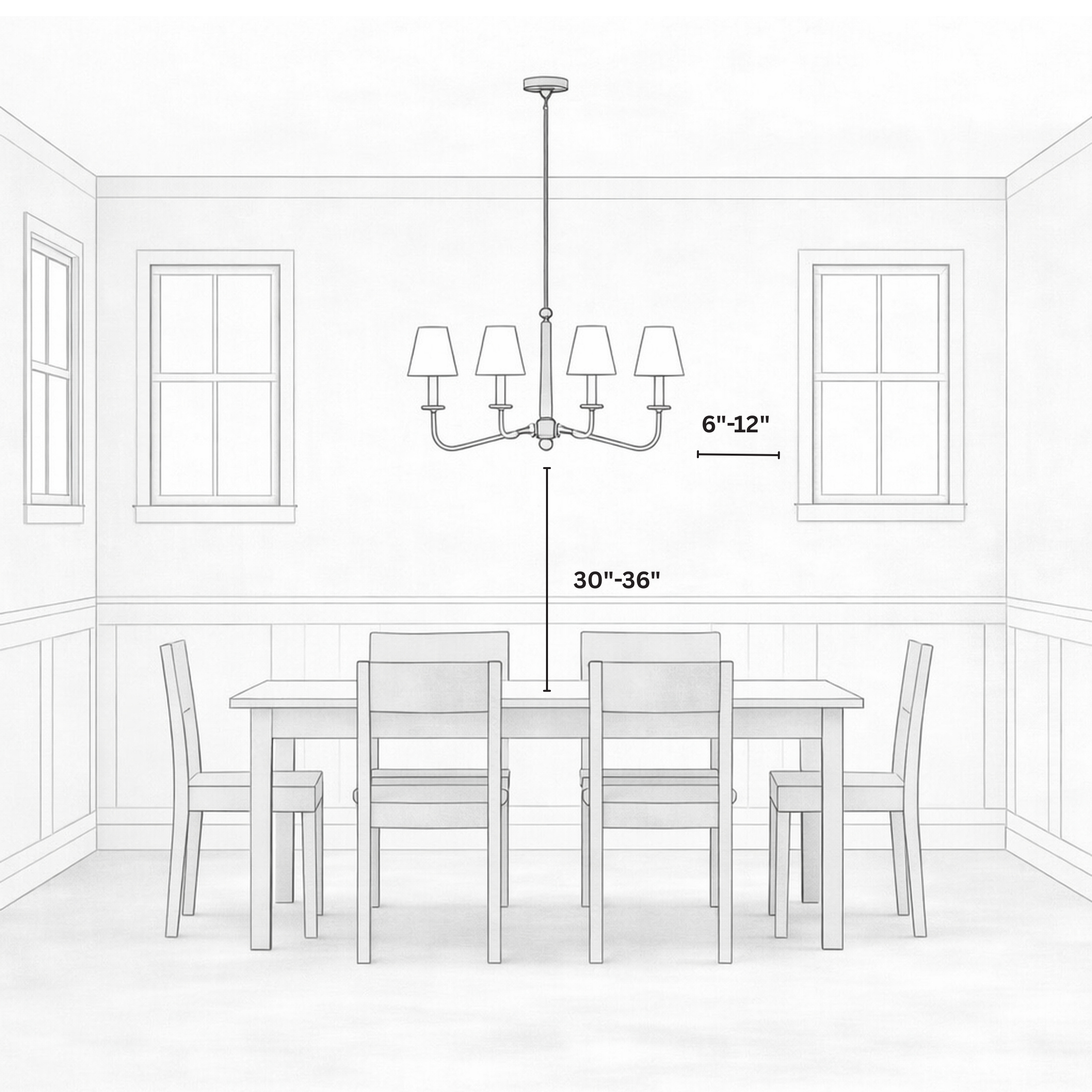
Your chandelier should be approximately one-half to two-thirds the width of your dining table. This keeps the fixture visually centered and proportional without extending too far beyond the edges of the table.
Hanging Height
Chandeliers should hang 30 to 36 inches above the table surface.
If your ceiling is taller than 8 feet, add about 3 inches to the hanging height for each additional foot of ceiling height. This keeps the fixture visually connected to the table while maintaining comfortable sightlines across the room. Maintain at least 6 to 12 inches of clearance between the edge of the chandelier and the edge of the table to prevent overcrowding and ensure proper scale.
How to Size Pendant Lights Over a Kitchen Island
Kitchen islands are one of the most common places for pendant lighting, and getting the scale right makes a noticeable difference in both function and overall design.
Number of Pendants
The number of pendants depends on the length of your island:
- Small islands (4–5 feet): 1 to 2 pendants
- Medium islands (6–7 feet): 2 to 3 pendants
- Large islands (8+ feet): 3 or more pendants
The goal is to create even visual spacing without overcrowding the surface.
Pendant Size
Each pendant should be proportionate to the island:
- 10 to 15 inches in diameter for smaller islands
- 15 to 20 inches or more for larger islands
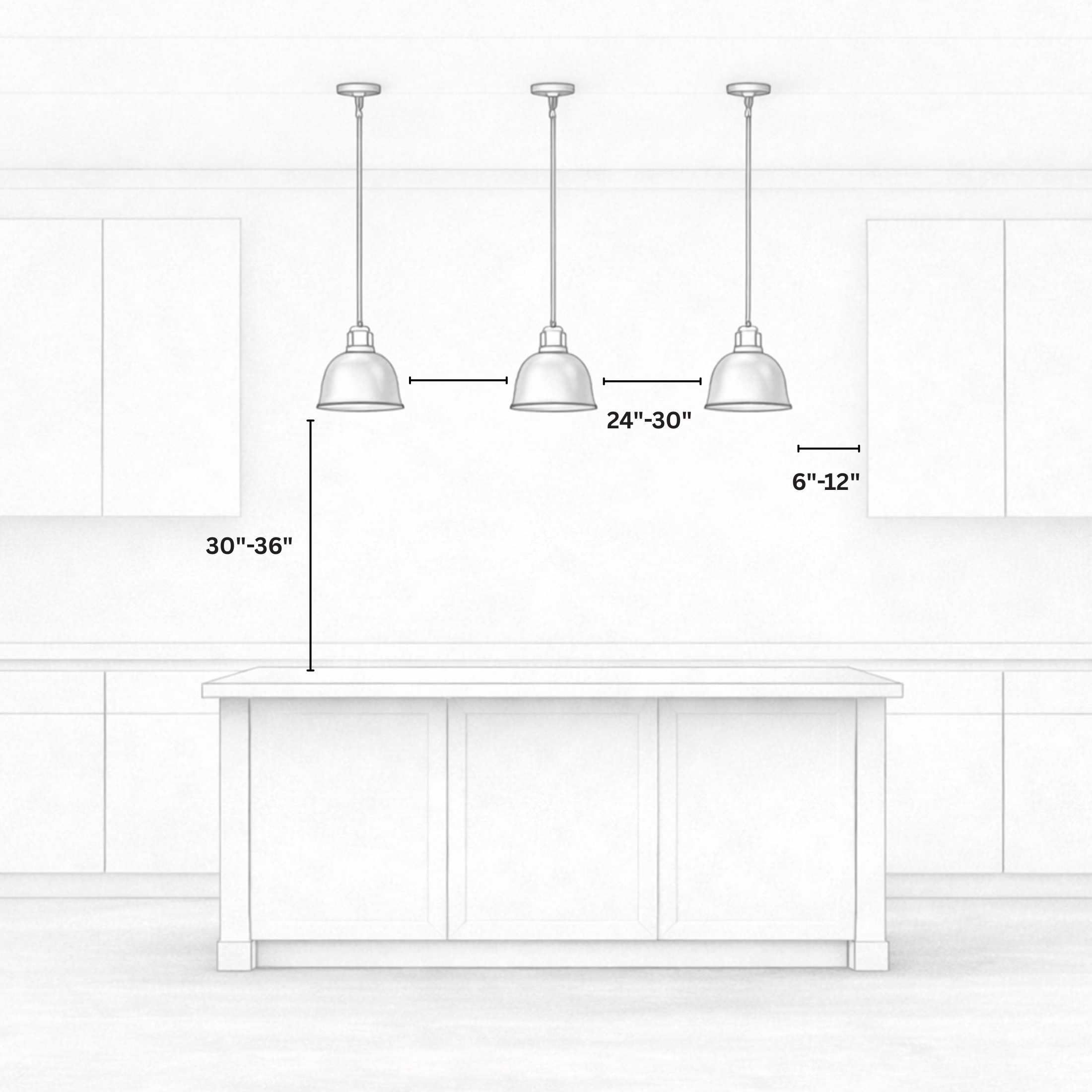
Spacing is just as important as size. Leave about 24 to 30 inches between each pendant to keep the layout balanced. Maintain at least 6 inches of space from the edge of the island to avoid a cramped look.
Hanging Height
Pendants should typically hang 30 to 36 inches above the countertop.
This height provides effective task lighting while keeping sightlines open across the kitchen.
How to Size a Light Fixture for an Entryway or Foyer
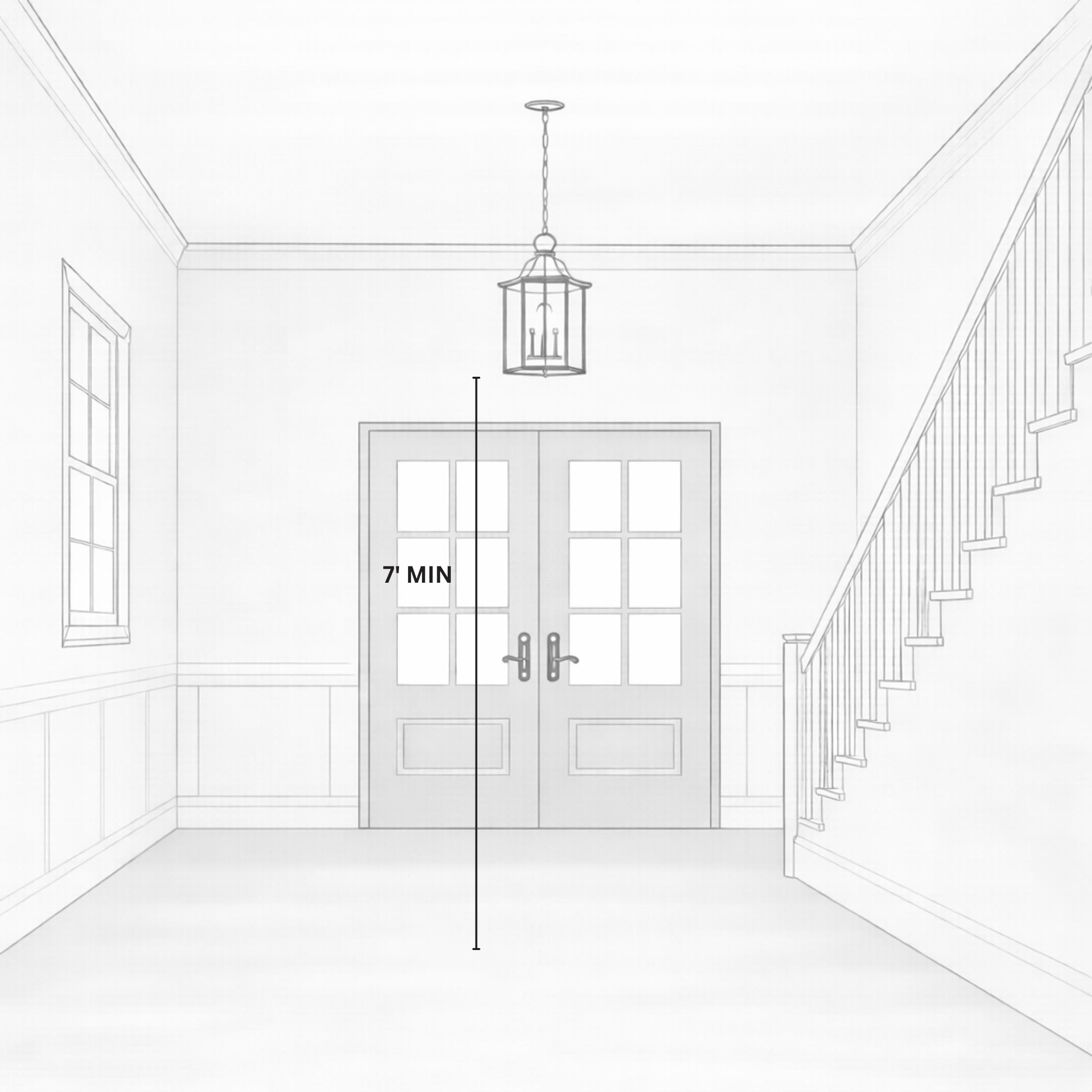
Entryways and foyers often feature higher ceilings, which gives you the opportunity to use larger, more dramatic lighting. The right size fixture helps anchor the space and creates a strong first impression without feeling overwhelming.
Diameter Formula
Start with the standard room sizing formula. Add the length and width of your foyer in feet, then convert that total to inches. This number will give you a well-proportioned fixture diameter for the space.
Height Guidelines
In taller spaces, fixture height becomes just as important as width. A good rule of thumb is to multiply your ceiling height in feet by 2.5 to 3. This gives you the ideal fixture height in inches.
For example, with a 12-foot ceiling:
12 × 2.5 = 30 inches
12 × 3 = 36 inches
Your fixture height should fall between 30 and 36 inches.
This range allows the fixture to feel substantial enough for the space while maintaining proper proportion and balance within the room.
Common Mistakes When Sizing Light Fixtures
Even with general guidelines, a few mistakes come up repeatedly and can throw off the entire look of a space.
Choosing Fixtures That Are Too Small
This is the most common issue. Many people play it safe, but undersized fixtures tend to disappear and fail to provide enough light. If you are between sizes, it is usually better to go slightly larger.
Ignoring Ceiling Height
A fixture can have the right diameter but still feel off if the height is not proportional to the ceiling. Scale is two-dimensional. Always consider both width and height together.
Poor Spacing Between Multiple Fixtures
This is especially noticeable in kitchens. Uneven spacing or incorrect sizing quickly makes a layout feel cluttered or unbalanced. Consistency in spacing and proportion is key.
Forgetting About Furniture Proportions
Lighting should relate directly to the furniture below it. A chandelier over a dining table or pendants over an island should feel anchored to that surface, not floating independently.
Tips for Getting the Right Fit
If you want your lighting to feel intentional and well-designed, a few simple steps make a noticeable difference:
- Use painter’s tape to outline the fixture size on your ceiling
- Mock the height using string or cardboard to visualize placement
- Check sightlines to make sure the fixture does not block views
- Consider bulb brightness alongside fixture size for proper illumination
Final Thoughts: Choosing the Right Size Lighting for Your Home
Sizing a light fixture does not need to be complicated, but it does require some intention. Once you understand the basic formulas and how scale works within a space, the process becomes much more straightforward.
The key is to think about the relationship between the fixture, the room, and the furniture. When those elements are in balance, the lighting feels natural and complete.
Whether you are selecting a chandelier for a dining room, pendants for a kitchen island, or a statement piece for an entryway, the right size makes a significant difference. It is one of those details people may not always notice directly, but they will feel it immediately when it is right.
