
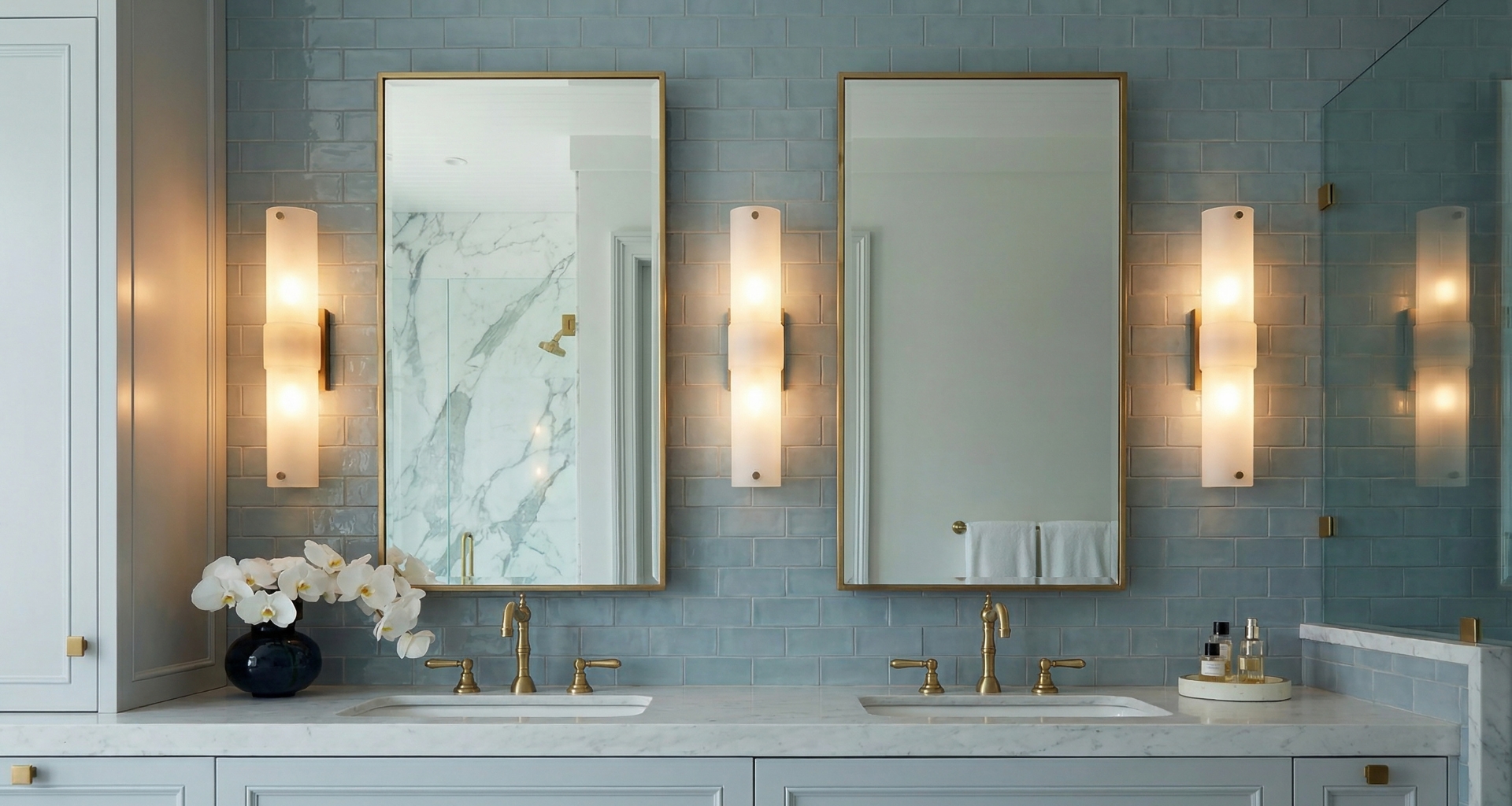
Bathrooms have shifted beyond purely functional spaces. They now support both routine and retreat, where design and comfort carry equal weight. Lighting should feel like a natural extension of the environment, aligning with how it’s actually used rather than just how it looks.
That’s where most bathrooms fall short. They’re designed to light the room, not the person using it. Everything is technically illuminated, but that doesn’t mean it’s working in a way that supports everyday use.
This becomes most noticeable at the vanity. You may finish your morning routine feeling put together, only to step into natural light and realize your makeup looks completely different. What appeared balanced indoors suddenly feels off. The issue isn’t the mirror. It’s the lighting.
A single overhead fixture usually casts light downward, creating shadows under the eyes, nose, and chin. These shadows distort how the face is seen, making it difficult to judge color, tone, and detail accurately. Even in a well-designed bathroom, this type of lighting can feel harsh and slightly uninviting. A more deliberate lighting approach corrects this at its source.
Lighting Placement
Good lighting starts with placement. Before thinking about style or finishes, focus on where light is needed and how it interacts with the room.
Over-Mirror Vanity Lighting
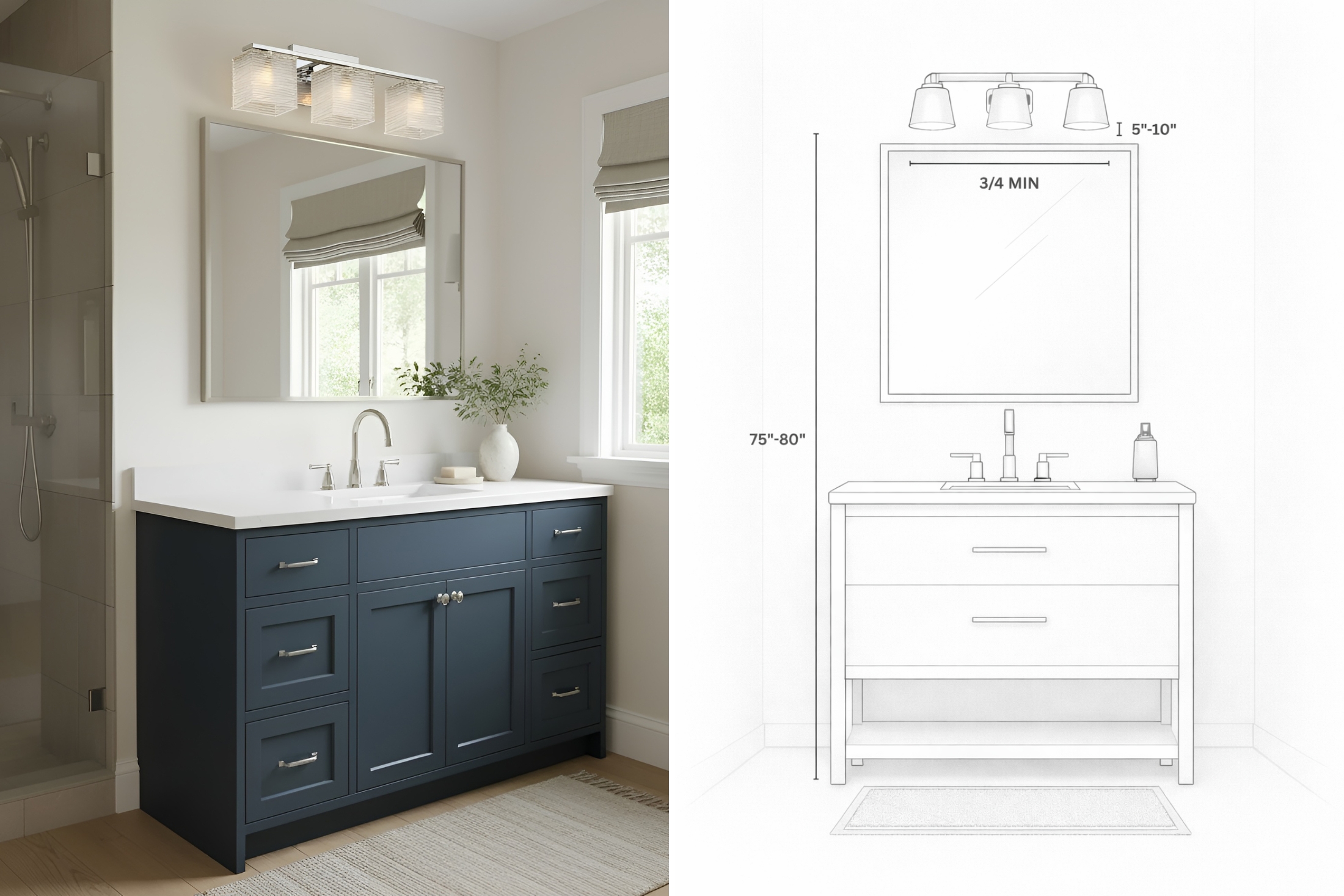
Over-mirror lighting is one of the most common vanity setups, but it requires careful execution to perform well. When used alone, a single fixture above the mirror casts light downward, creating shadows that can distort facial features and reduce visibility.
To improve performance, over-mirror lighting should be paired with diffused shades or wide light distribution to soften the downward cast. Positioning the fixture slightly above the mirror, rather than directly against it, can also help reduce harsh shadow lines.
While this setup can provide strong overall illumination, it works best as a supporting layer rather than the primary source of task lighting. When combined with eye-level fixtures or additional ambient light, it contributes to a more balanced and functional lighting scheme.
Eye-Level Vanity Lighting (Either Side of Mirror)
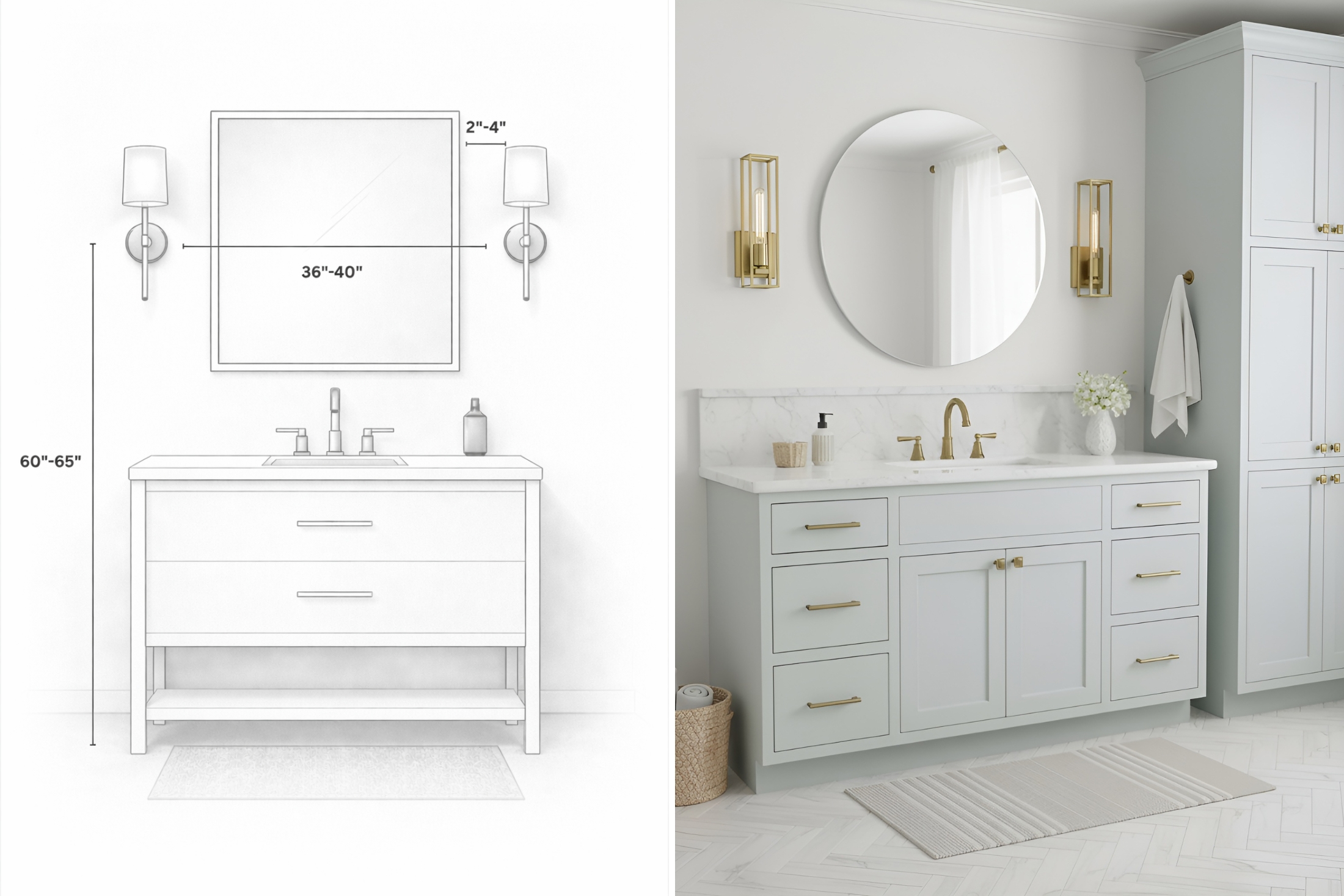
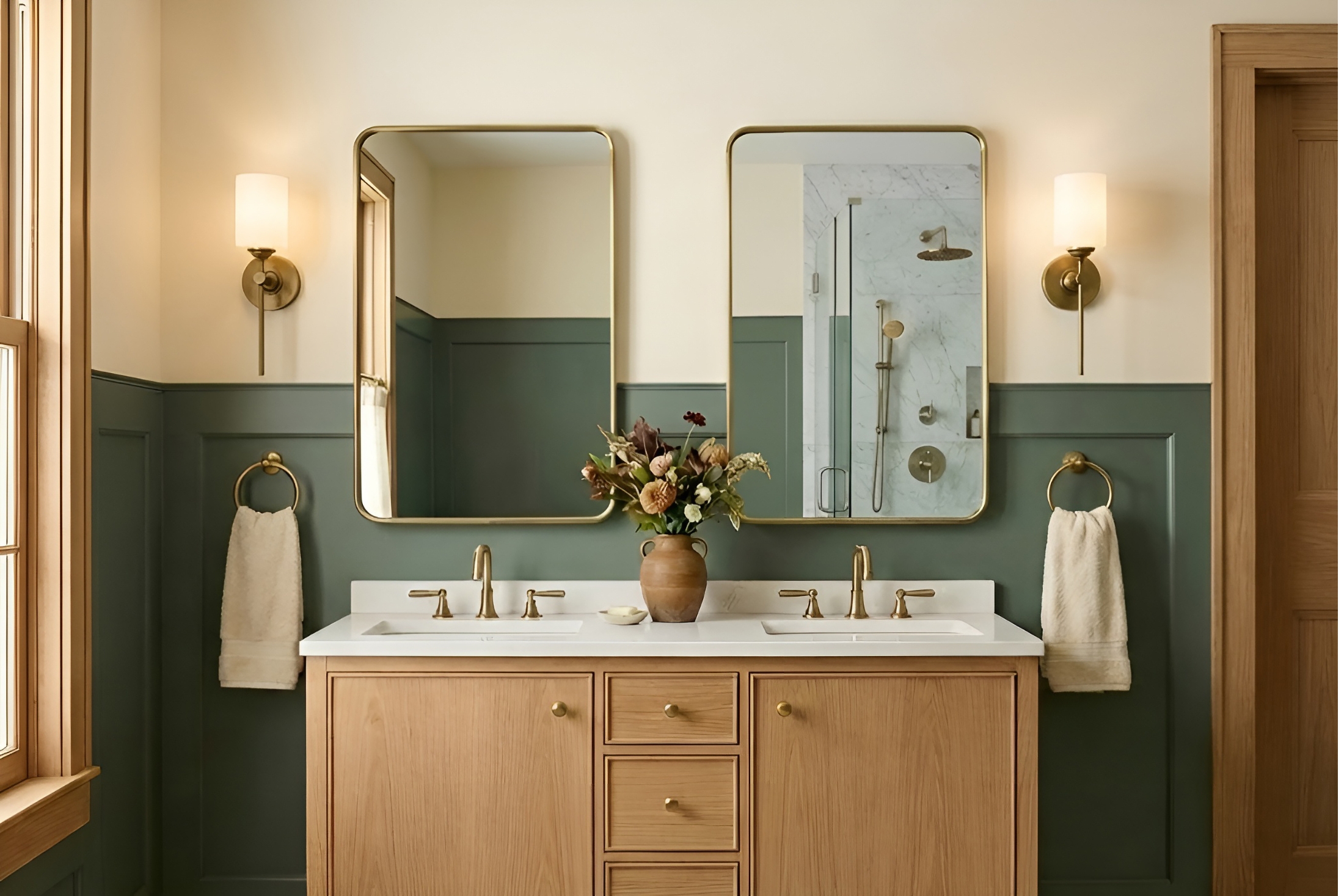
Eye-level vanity lighting is the most effective way to achieve even, accurate illumination at the mirror. Placing fixtures on either side allows light to reach the face from both directions, reducing shadows under the eyes, nose, and chin. This creates a more balanced reflection, making it easier to see true color and detail during daily routines.
Proper placement follows a simple structure. Fixtures should be mounted so the center of the light source sits approximately 60 to 65 inches from the floor, aligning with average eye level. Spacing should fall between 36 and 40 inches apart, depending on mirror width, with fixtures positioned slightly off the mirror edge so light can fully wrap the face.
This setup is designed around function. The result is lighting that feels natural, performs consistently, and eliminates the need to compensate for shadows.
Overhead Lighting
Overhead lighting provides a foundational layer of illumination. It ensures the space is evenly lit and comfortable to use without drawing attention to itself.
Recessed and flush-mount fixtures are the most common solutions, distributing light broadly while maintaining a clean visual profile. In larger bathrooms, a single fixture is rarely sufficient. Multiple light sources spaced evenly across the ceiling help eliminate darker areas and create consistent coverage.
Fixture placement should be planned to avoid uneven coverage. Fixtures spaced too far apart leave dark areas, while overly concentrated placement creates hotspots and pulls focus to one part of the room. The goal is consistent, even light across the entire room.
Decorative fixtures can be layered in, but they should not disrupt that balance or introduce unnecessary contrast.
Shower and Tub Lighting
Shower and tub areas require thoughtful support, especially in spaces with limited natural light. Spillover from surrounding lighting is often not enough to provide consistent visibility.
Ceiling-mounted fixtures and well-placed ambient lighting keep these areas evenly lit without harsh contrast or dark zones. In open layouts, this keeps the space feeling cohesive rather than segmented.
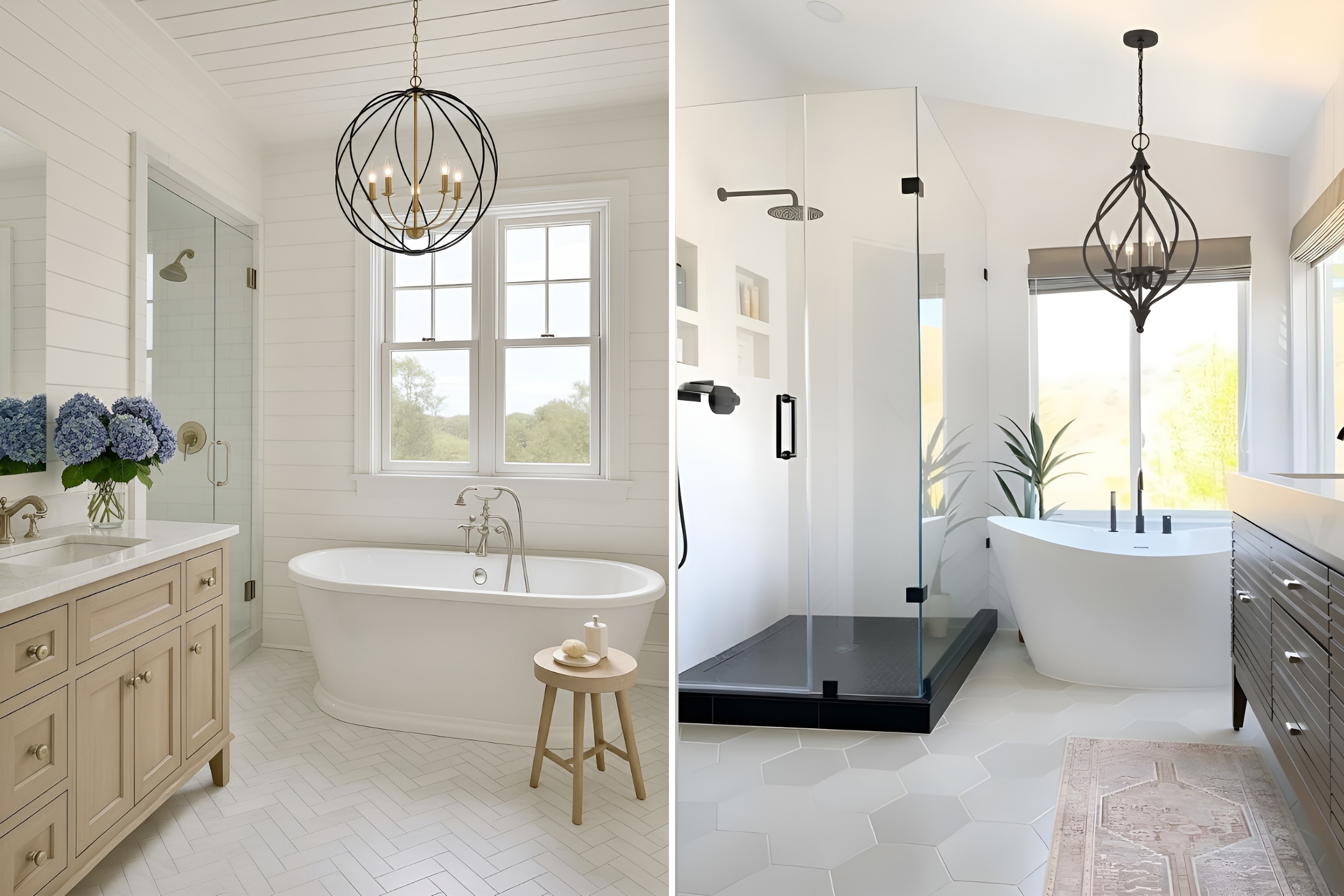
Decorative fixtures, such as pendants above a freestanding tub, can create a focal point and add to ambient light. When handled correctly, these elements define the space without isolating it.
Accent Lighting
Accent lighting introduces depth and dimension. It highlights architectural details, shelving, floating vanities, or textured surfaces, giving the space a more intentional, finished feel.
Restraint matters here. Accent lighting should support the space quietly. If it draws attention before anything else in the room, it’s doing too much.
Layering: Building a Balanced Lighting Plan
A single light source rarely delivers the kind of control a bathroom needs. Even when the room feels bright, the lighting can still fall short in key areas.
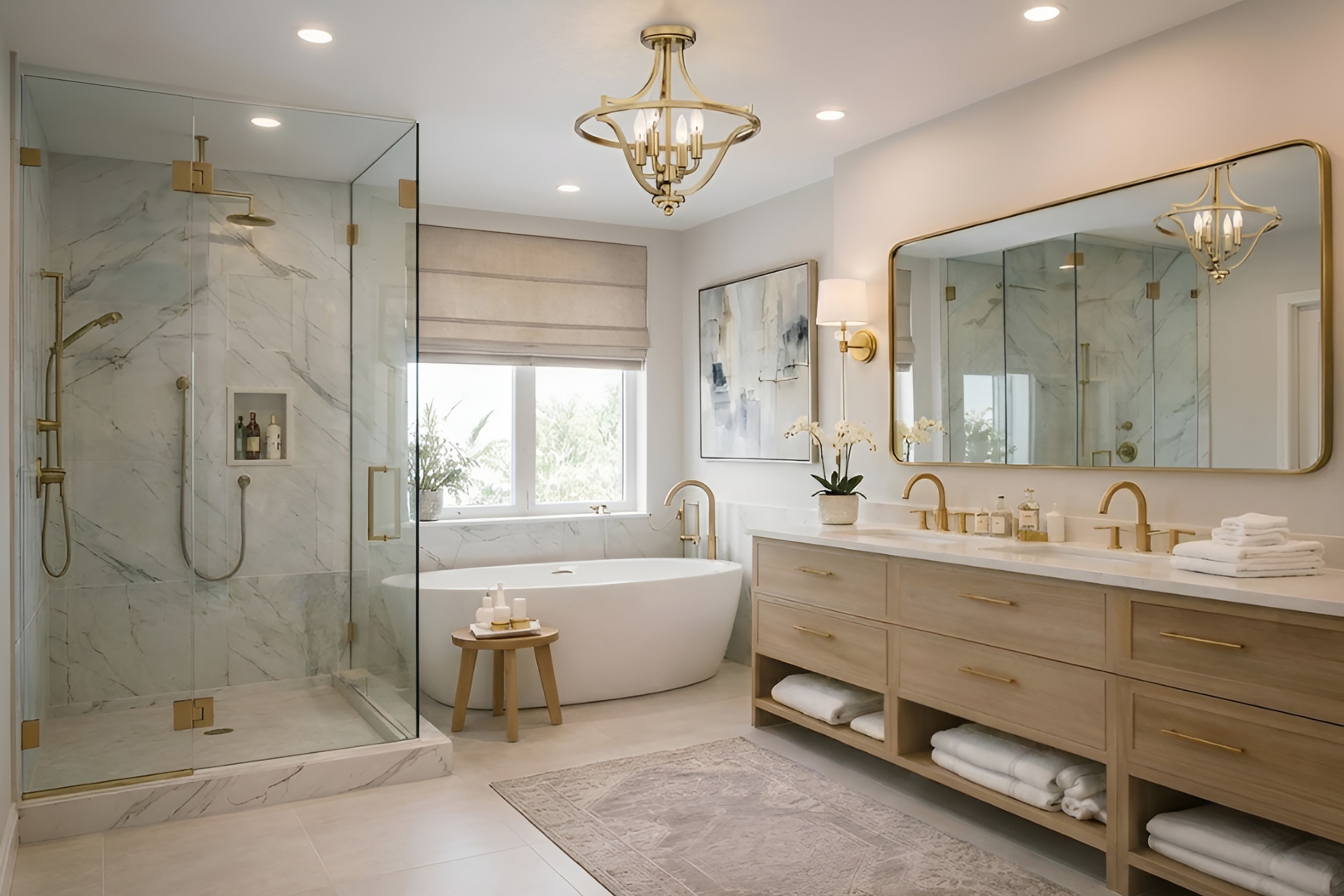
A layered approach allows each type of lighting to serve a specific role.
- Ambient lighting provides overall illumination and establishes the baseline brightness of the room. Ceiling-mounted fixtures are typically responsible for this layer, distributing light broadly so the space feels open and bright.
- Task lighting focuses on precision. At the vanity, this means creating consistent, even light that supports grooming and daily routines without distortion or strain.
- Accent lighting highlights room details, adds contrast, and softens the overall environment, preventing the space from feeling flat or overlit.
When these layers work together, the bathroom becomes more adaptable. Brighter and more functional when needed, quieter and more relaxed when it’s not. The result feels considered rather than one-dimensional.
Choosing the Right Bulbs
Once fixture placement and layering are established, bulb selection becomes the next priority. The specifications you choose directly impact visibility, accuracy, and overall performance.
When selecting bulbs, there are a few key factors to keep in mind.
Brightness (Lumens)
Lumens measure the amount of light a bulb produces, which determines how well the space is illuminated.
For vanity lighting, aim for approximately 700 to 800 lumens per fixture to support clear visibility during daily routines. Ambient lighting levels should be adjusted based on the size and layout of the room, ensuring consistent coverage without creating overly bright areas.
LED bulbs are typically the most effective option, offering strong output with lower energy use and longer lifespan.
Color Temperature (Kelvin)
Color temperature defines the tone of the light and plays a key role in how the space is perceived throughout the day.
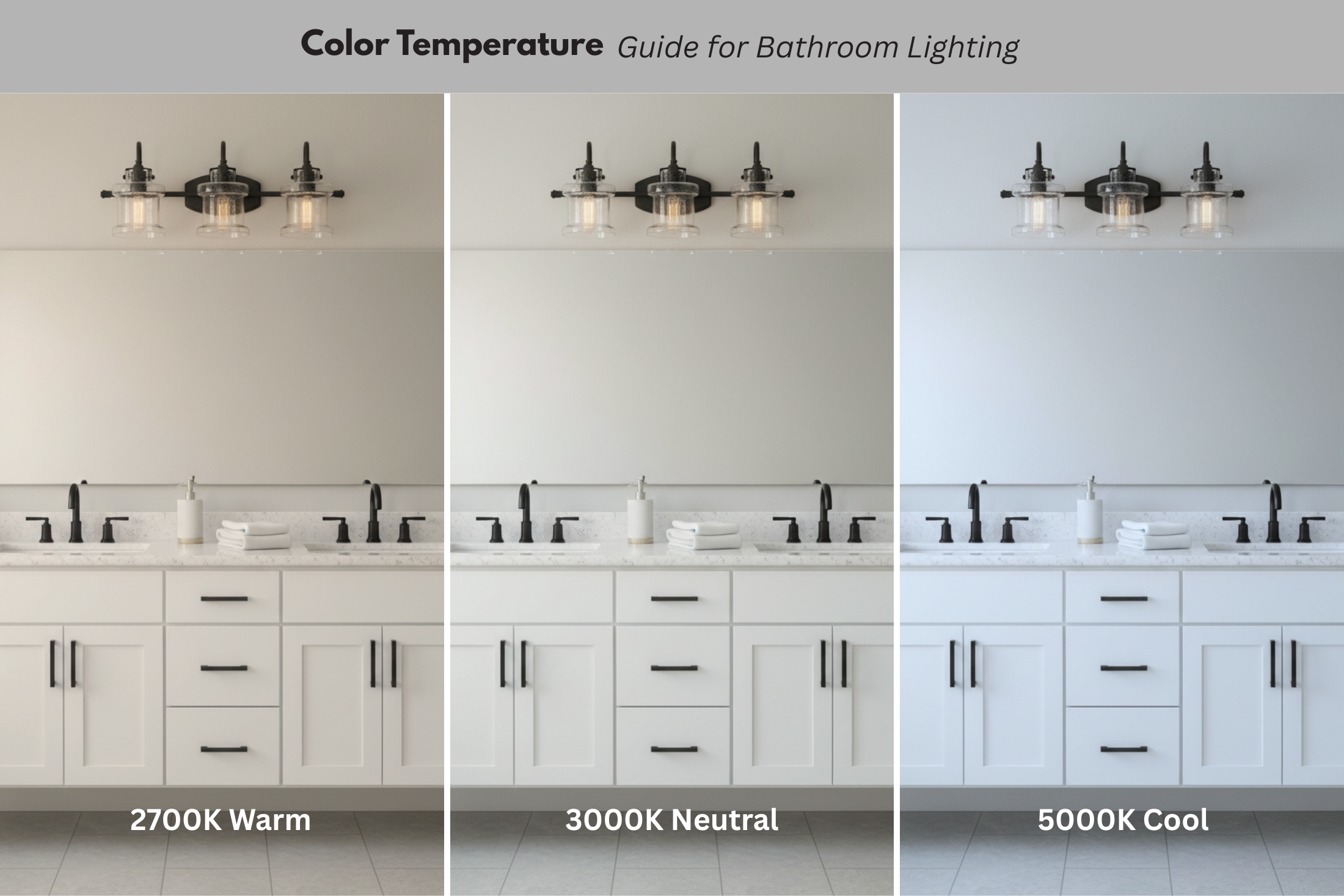
- 2700K produces a warmer light similar to a living room or bedroom. It creates a softer atmosphere but can feel slightly yellow at the mirror.
- 3000K to 3500K provides a more neutral tone that works well for everyday use, offering clarity without feeling harsh.
- 5000K and above creates a cooler, brighter light that can feel stark and overly clinical in a residential bathroom.
This becomes obvious when you move into natural light or a room with a different light level. What looked balanced in the bathroom can shift quickly under different conditions. For most bathrooms, a 3000K range provides the most reliable result. It keeps the space feeling clean and natural while supporting accurate visibility.
Color Accuracy (CRI)
Color Rendering Index measures how accurately colors appear under a light source compared to natural daylight.
This matters most at the vanity. Lower CRI lighting can flatten or shift tones, making skin appear dull or slightly off. Makeup, fabrics, and finishes may not look the way they actually are.
Higher CRI lighting provides a more reliable reference point. Colors appear more true-to-life, with better depth and separation between tones.
For bathroom lighting, a CRI of 90 or higher is recommended. It ensures what you see in the mirror translates more accurately into other environments without needing to compensate.
Putting It Into Practice
Most bathrooms do not need a full redesign to function better. More often, the problem comes down to a few lighting decisions that were easy to overlook.
Start at the vanity. If light is not positioned at or near eye level, that is usually the first thing worth correcting. It has the biggest effect on how the room works day to day, especially for grooming, makeup, and other close-up tasks where visibility matters.
Next, look at the room as a whole. Overhead lighting should provide even coverage across the full space, not just brighten the center of the ceiling. In larger bathrooms, one fixture is often not enough to prevent dim areas or uneven distribution.
Finally, check for consistency. Bulb temperature and color rendering should feel aligned across every fixture in the room. When lighting shifts from warm to cool or varies in color quality, the space can feel disjointed even when it seems bright enough.
Improving bathroom lighting is usually not about adding more. It is about making better use of what is already there. When placement, coverage, and bulb quality work together, the room feels more functional, more comfortable, and easier to use every day.
Explore vanity, sconce, pendant, and ceiling lighting designed for balanced, everyday use. View the full bathroom lighting collection.
