
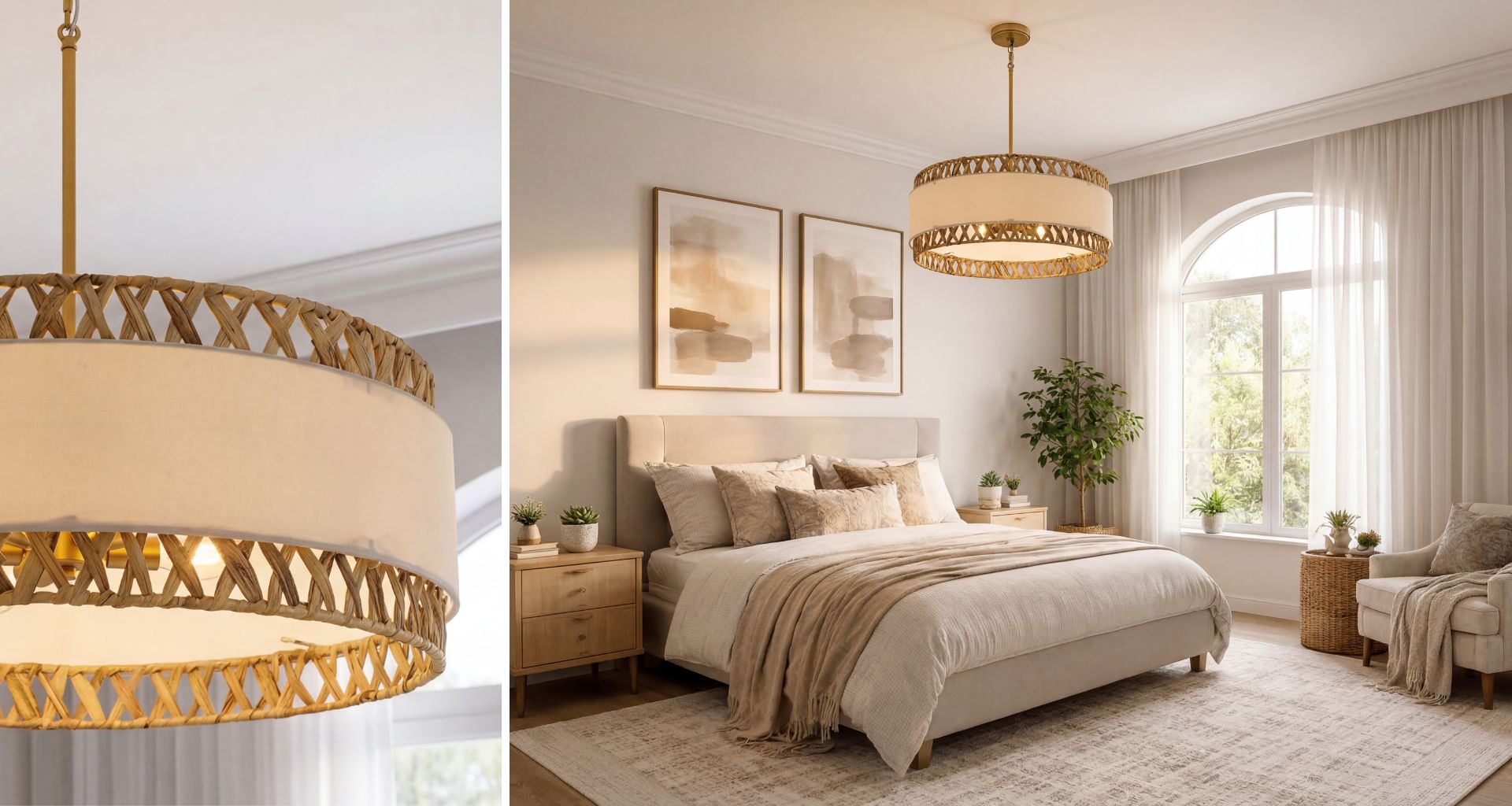
Natural materials define many modern interiors, but people often link them only to furniture, textiles, or decor. Lighting often gets overlooked, even though it is one of the best ways to add organic texture to a space.
Unlike larger design elements, lighting sits at eye level or above it, so it naturally draws attention. The materials, finishes, and forms you choose can either soften a room or make it feel overly structured. When done well, natural-material lighting adds warmth and depth without overwhelming the space.
Why Natural Materials Work So Well in Lighting
Most interiors are made up of hard, reflective surfaces. Think stone countertops, painted cabinetry, metal hardware, and glass. These materials reflect light in sharp, controlled ways, which can sometimes make a space feel a little cold or rigid.
Natural materials shift that experience. Woven fibers, wood tones, textured stone, and capiz accents interact with light more gently. Instead of reflecting it harshly, they absorb, diffuse, or soften it, creating a more comfortable and balanced environment.
That’s what makes lighting such a powerful tool. It doesn’t just sit in the room. It actively shapes how the room feels.
Woven Materials: Softening Harsh Light
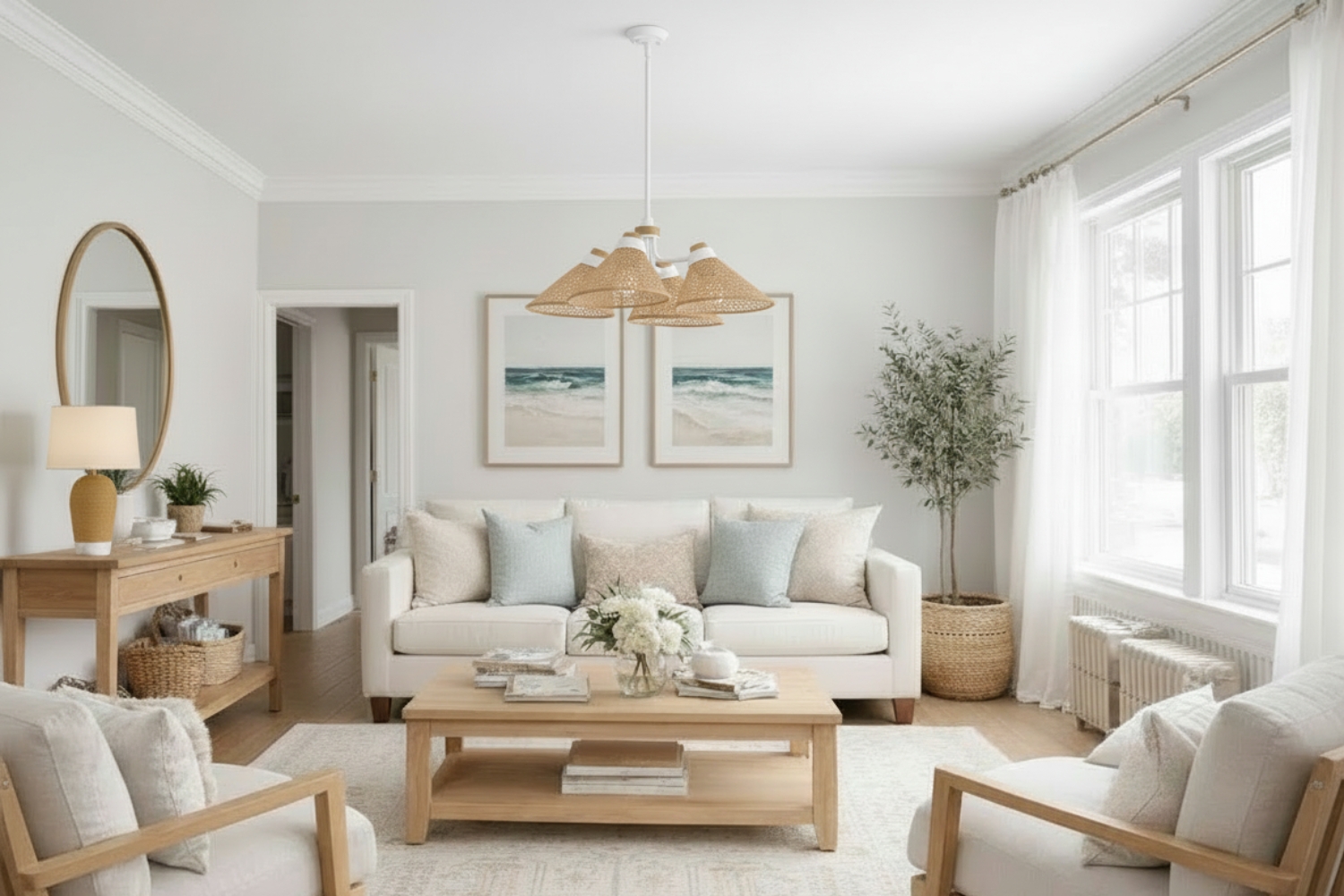
Woven materials like rattan, rope, and other natural fibers are a simple way to add texture to a space. They break up direct light, reduce glare, and create a softer, more relaxed atmosphere.

You’ll often see these used in kitchens, entryways, and open-concept spaces where there are a lot of reflective surfaces. The irregular weave diffuses light unevenly. This helps by reducing contrast and making the space feel more inviting.
Woven materials often look casual, so balance them with clean lines or structured finishes. This keeps the look intentional.
Ceramic and Stone: Grounding the Space
Ceramic and stone bring a different kind of presence. Instead of filtering light, they add visual weight and stability to a room.
Table lamps with ceramic or stone bases feel grounded and intentional. Subtle variation in the material adds interest without relying on bold color or pattern.
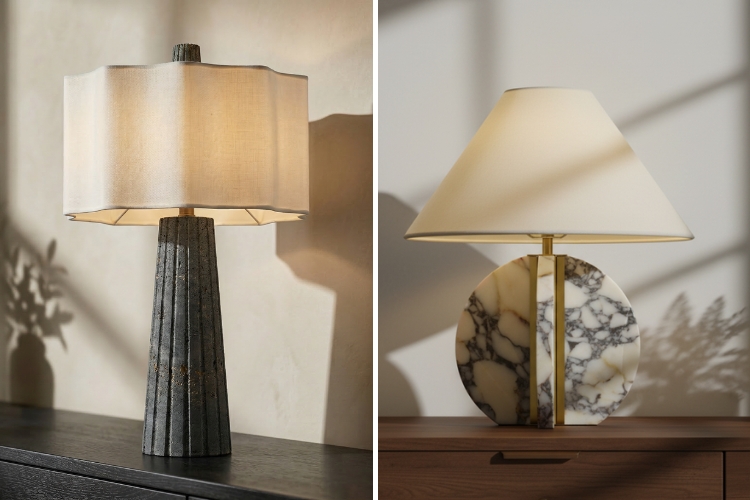
These work well in bedrooms and living rooms. You can layer light there without everything competing for attention. They help a space feel complete without feeling busy.
Capiz and Light-Filtering Materials: Creating a Layered Glow
Some materials go beyond texture and actually change the way light behaves. Capiz is a great example.
Instead of blocking or breaking up light, capiz allows it to pass through the surface. The result is a soft, layered glow that feels warm without being dim. Natural variation in the material creates subtle movement within the light, adding depth without introducing pattern.
This makes capiz great for dining rooms and living spaces, where light should feel soft but still useful.
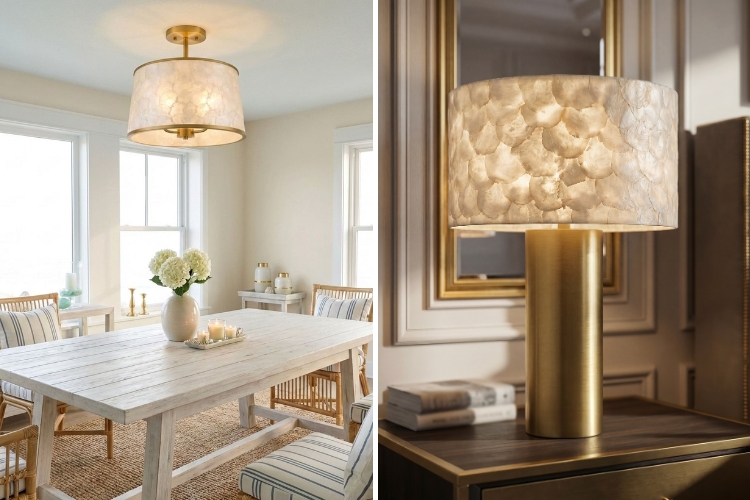
In brighter rooms, it’s especially useful because it softens the contrast between daylight and artificial light. This creates a more balanced feel throughout the day.
When paired with structured finishes like brushed brass, capiz creates a look that feels both organic and refined.
Wood and Warm Finishes: Creating Cohesion
Wood tones and warm finishes help tie everything together. Even small wood accents in a fixture can tie in with the room’s flooring, furniture, or architectural details.
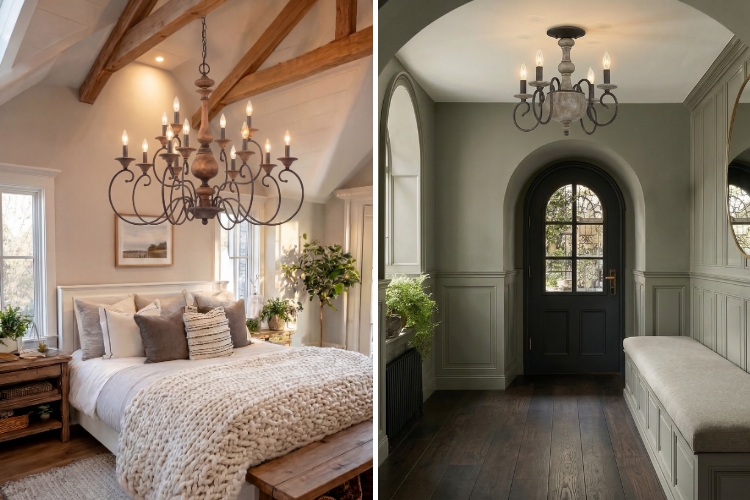
This isn’t about making a statement. It’s about creating continuity. In more transitional spaces, wood helps bridge the gap between modern shapes and traditional materials. Used thoughtfully, it supports the overall design without taking over.
How to Use Natural Materials in Real Spaces
Entryway
If the entry is narrow or minimal, stick with a single statement piece that adds texture without overwhelming the scale. In larger foyers, you can go slightly more dimensional, but keep the shape clean so the material remains the focus.
Living Room
This is where layering really matters. Combine a natural-material overhead fixture with ceramic or stone table lamps to create depth at different levels. The goal isn’t to match, it’s to create balance across the room.
Dining Room
A capiz fixture helps soften shadows and reduce glare across the table, which makes the space feel more comfortable to sit in for longer periods. Keep the fixture centered and scaled appropriately to the table so it feels anchored, not floating.
Bedroom
Ceramic or stone table lamps are a strong choice here because they add weight without drawing too much attention. Pairing them with a softly diffused shade helps create an even, comfortable glow that supports winding down at the end of the day.
If you want to introduce more texture, keep it minimal. A slight variation in the base or a warm, organic finish is usually enough. The goal is to make the space feel relaxed and cohesive, not layered or styled.
Open Spaces
Use natural-material fixtures to define zones. For example, a woven pendant over a kitchen island and a capiz fixture over a dining table create subtle separation while still feeling cohesive. The materials don’t need to match, but they should relate in tone or finish so the space feels intentional rather than disconnected.
General Guidelines for Using Natural Materials
·
Avoid layering too many similar textures in one
area. It can start to feel cluttered.
·
Balance organic materials with structured
finishes like matte black or brushed brass.
·
Pay attention to scale. Textured fixtures often
read larger than their actual size.
· Think about lighting early in the design process. It should help shape the space, not just fill it in at the end.
Why Material Choice Matters More Than You Think
Natural materials aren’t just a trend. They’re one of the easiest ways to make a space feel more comfortable and lived-in. The key is understanding how each material behaves.
When you choose lighting with that in mind, you’re not just adding a fixture. You’re shaping the entire atmosphere of the room.
Frequently Asked Questions
What is capiz, and why is it used in lighting?
Capiz is a natural shell material that is thin and translucent. In lighting, it allows light to pass through while diffusing it, creating a soft, layered glow. It’s often used in shades to add warmth and visual depth without harsh brightness.
Are natural-material light fixtures only suited for coastal or casual spaces?
Not at all. While woven materials tend to feel more relaxed, materials like capiz, stone, and ceramic can work in more refined or transitional interiors. The overall look depends on the shape of the fixture and the finishes it’s paired with.
How do I clean natural-material light fixtures?
Cleaning depends on the material, but in general, gentle care is best.
·
Woven materials like rattan or rope should be
dusted regularly with a soft brush or vacuum attachment. Avoid moisture, as it
can weaken fibers.
·
Ceramic and stone bases can be wiped with a dry
or slightly damp cloth. Avoid harsh cleaners that can damage the finish.
·
Capiz should be handled carefully. Use a soft,
dry cloth to remove dust and avoid pressing too hard, as the shells can be
delicate.
Routine light cleaning will help maintain both appearance and performance over time.
How do I know which natural material is right for my space?
Start with the feeling you want to create.
·
If your space feels too bright or rigid, woven
materials can help soften it.
·
If it feels ungrounded or lacks structure,
ceramic or stone adds stability.
·
If you want something that feels refined but
still warm, capiz is a strong option.
Also consider what’s already in the room. The best choice is usually the one that complements existing materials rather than competing with them.
